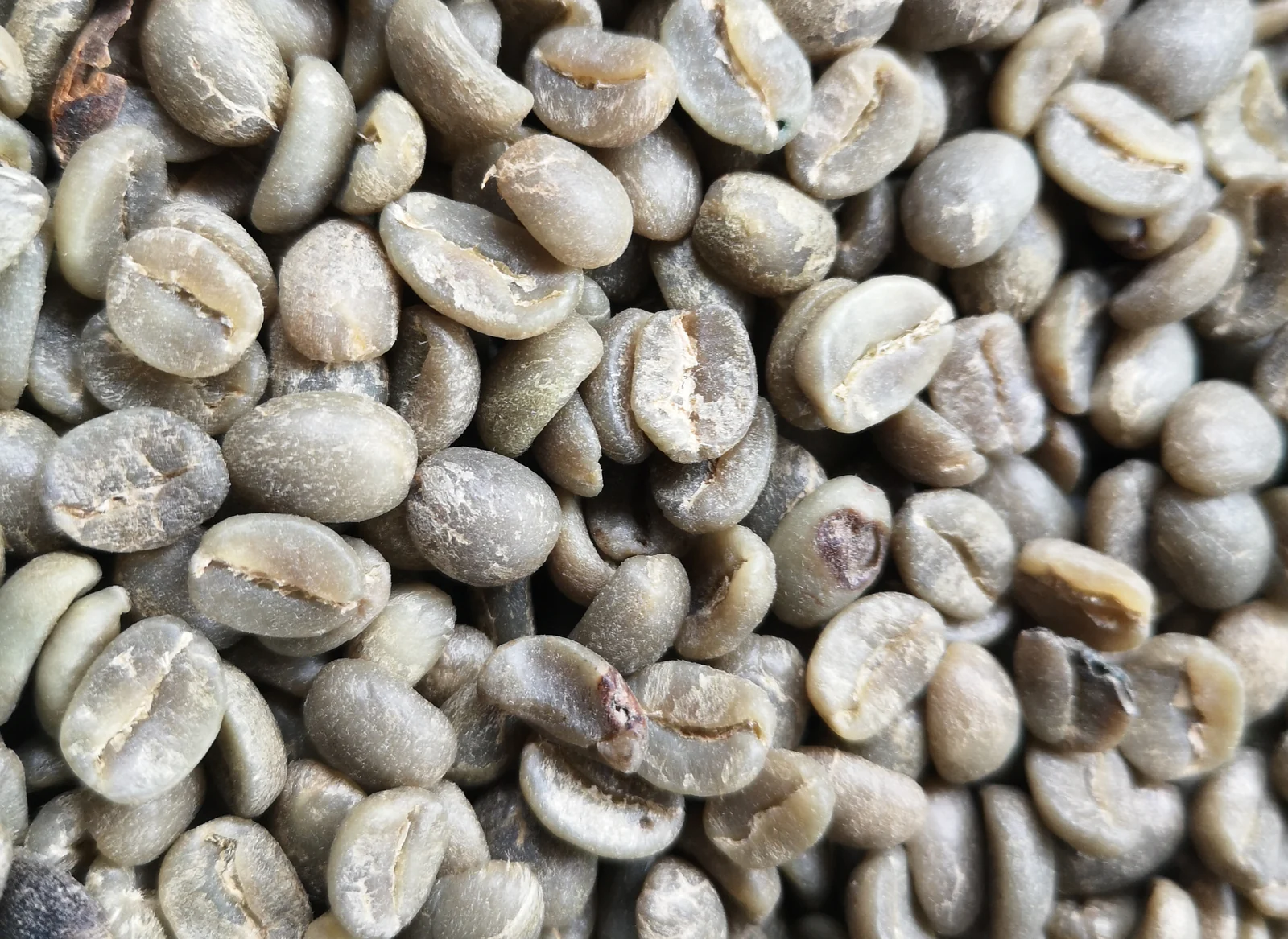
Indonesian Arabica Green Coffee Beans
Buy Indonesian Arabica by origin, process and cup. Compare Gayo, Mandheling, Java, Bali and other highland coffees, then request a price or a sample of the lot you want to roast.
- FOB port
- By producing region
- Container option
- 16–18 t / 20 ft
- Crop year
- By lot
- Stock
- Check by lot
Smaller volumes
For a trial or a mixed container, tell us the kilograms per origin and your destination. We will check which lots can travel together and quote the consolidation costs.
Sample policy
- Beans
- Up to 1 kg is free. Larger samples carry a charge.
- Delivery
- Choose paid courier delivery, use your own courier account, or arrange free pickup anywhere in Indonesia.
- Order credit
- Any sample fee is credited against your first full order.
Price guidance
A washed Kintamani and a semi-washed Mandheling can have similar screen sizes and different prices. We quote the origin, crop, process and grade you request. Send the tonnage and loading month for an FOB price per tonne, or include your destination port for CIF. We reply within 24 hours.
Arabica grades & bean sizes
Compare the screen sizes and moisture limits for each green grade. If you buy by origin, include the growing area and processing method in your quote request.
Arabica processing methods| Arabica grade | Typical screen | Green moisture limit | Quote |
|---|---|---|---|
| Grade 1Commercial grade | Typical screen 15–19 | Green moisture limit 12.5–13% by lot | |
| Grade 2Commercial grade | Typical screen 15–18 | Green moisture limit 12.5% on selected lots | |
| Grade 3Commercial grade | Typical screen 15–18 | Green moisture limit 12.5% on selected lots | |
| Grade 4Reference grade | Typical screen By lot | Green moisture limit By lot | |
| Grade 5Reference grade | Typical screen By lot | Green moisture limit By lot | |
| Grade 6Reference grade | Typical screen By lot | Green moisture limit By lot |
The screen ranges and moisture limits are examples from individual lots. We confirm both in the offer and can send a sample for cupping.
Arabica processing methods
If processing matters to your roast, name the method with your grade. Availability varies by origin and harvest.
- Fully washed
- The producer removes the fruit and washes the parchment before drying. Try a washed Kintamani or Ijen if you want clarity and a distinct acidity.
- Wet-hulled & semi-washed
- In giling basah, the mill removes the parchment while the coffee is still damp. If a lot is described as semi-washed, ask when it was hulled. Lintong and Mandheling are good starting points for a fuller cup.
- Natural
- The whole cherry dries around the seed. Ask for a natural lot if you want to sample more fruit character, then check sweetness and finish at your own roast level.
- Honey
- Some fruit mucilage stays on the parchment during drying. Ask which honey lots are available and compare a sample with a washed coffee from the same harvest.
Need a specific origin, process or screen size?
Where our Indonesian Arabica grows
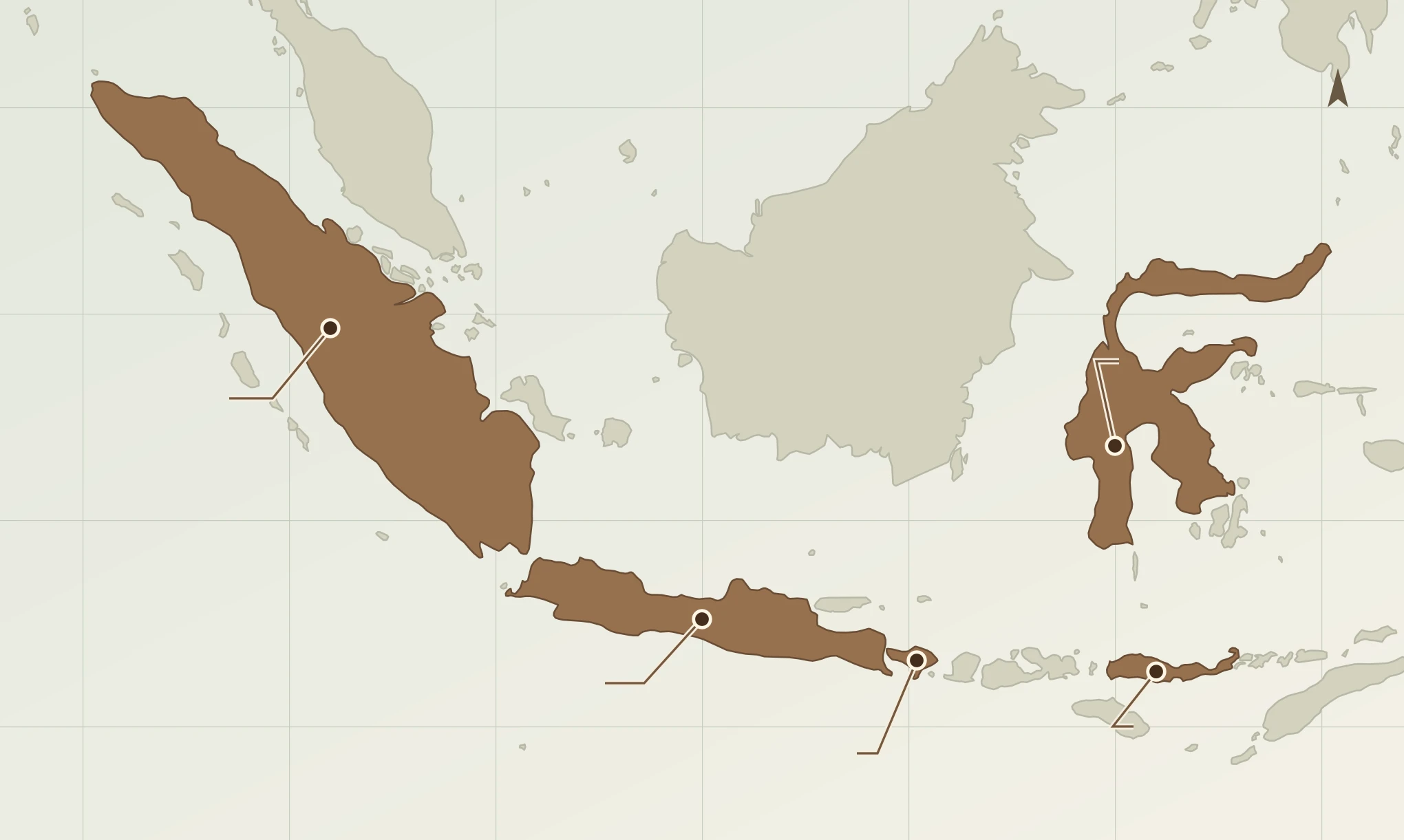
Our Arabica selection spans five islands. If your menu names an origin, include the growing area in your inquiry. If you buy for the cup, the regional profiles below can help you choose two samples for a side-by-side roast.
- Sumatra
- Gayo Longberry from Aceh has herbal and spice notes. For an espresso base, compare its body with the chocolate character of Mandheling or the savory finish of Lintong.
- Java
- West Java’s Preanger selection pairs caramel sweetness with a floral aroma. Washed Ijen from East Java is a useful second sample for a brighter, nutty cup.
- Bali
- Washed Kintamani from the Bangli highlands offers orange and lemon aromas with a medium body. Try it as a single-origin filter roast.
- Sulawesi
- Toraja offers washed estate lots and wet-hulled smallholder lots. Ask for both if you want to compare how processing affects body and acidity.
- Flores
- Washed Arabica from the Flores highlands combines citrus and chocolate with a full body. Taste it alongside Bali if you want citrus with more weight in the cup.
What to look for in the cup
Roast the samples to a comparable colour and cup them blind with the same grind, water and brew ratio. Taste again as they cool. For filter coffee, record sweetness, clarity and acidity. For espresso, check body and finish at the dose you plan to serve. Keep the lot code with your notes when you approve a sample.
Packing & freight for green Arabica
A 20 ft container of bagged green coffee typically carries 16–18 tonnes. A 40 ft high cube can carry 28–30 tonnes where the payload and route allow. We confirm net weight from the bag count, packing plan and permitted load.
| Container | Load | Preparation |
|---|---|---|
| 20′ container | 16–18 tonnes | 7–14 days |
| 40′ high cube | 28–30 tonnes | 14–21 days |
From sample approval to loading
Allow time to cup the offer sample and agree the bag marks before booking the sailing.
The estimates cover preparation in Indonesia. We confirm the loading window, sailing and sea transit for the route in your quote.
Specify 50 or 60 kg jute bags with a food-grade liner and tell us which lot and origin marks you need on each bag. For a moisture-sensitive shipment, request a hermetic liner or vacuum packing so the supplier can confirm the format and its cost.
Ports for Indonesian Arabica
The producing island helps determine where the coffee is milled and consolidated. Common options include the following.
| Coffee or origin | Loading port options |
|---|---|
| Gayo, Mandheling and Lintong | Belawan or Kuala Tanjung |
| Java Preanger and Ijen | Tanjung Priok or Tanjung Perak |
| Bali Kintamani | Benoa, with consolidation available via Java |
| Toraja | Makassar |
| Flores | Regional consolidation via Kupang or export via Tanjung Perak |
For CIF, name your destination port and required arrival month. We confirm the route and estimated transit against the sailing available.
Shipping to another port? Tell us your destination port and we will quote it.
Payment and documents
Payment terms
- Bank transfer
- 30% T/T in advance, 70% T/T against copy of B/L
- Letter of credit
- 100% irrevocable L/C at sight
- Combined payment
- 30% T/T in advance, 70% irrevocable L/C at sight
Documents shipped with every lot
- Certificate of origin
- ICO certificate of origin
- Pre-shipment quality report
- Phytosanitary certificate
- Fumigation certificate
Certificates and inspections
- Available on request
- Halal
- Kosher
- Organic
- Fairtrade
- US FDA registration
- SGS pre-shipment inspection
Questions from green Arabica buyers
How much does Indonesian Arabica green coffee cost per tonne?
The offer depends on origin, crop, processing method, grade and how the lot cups. Send the coffee you want, tonnage and shipment month. We reply within 24 hours with an FOB price, or a CIF price if you include your destination port.
Which Arabica should I sample for filter coffee?
For a citrus-led filter, start with washed Bali Kintamani. Flores gives you a second washed coffee with citrus, chocolate and a fuller body. Request both lot codes so you can compare them at the same roast level.
Which origins work for single-origin espresso?
Mandheling is a starting point for chocolate and body. For a sweeter, floral comparison, try Java Preanger. Pull both at your normal espresso recipe before choosing the lot.
Can I specify the process as well as the origin?
Yes. For example, Toraja has fully washed estate selections and wet-hulled smallholder selections. If your contract requires one process, name it in the inquiry so we can identify a suitable lot.
What does Grade 1 tell me about the coffee?
The Indonesian physical grade allows up to 11 weighted defect points per 300 g for Grade 1. To assess the cup, ask for a lot sample and cupping notes alongside the defect report.
When should I ask about the new crop?
Sumatra’s main harvest generally runs from October into January. Java, Bali, Sulawesi and Flores have their main harvests around the middle of the year. Give us your delivery month so we can check which crop will be milled and ready to ship.
Can I get a free green Arabica sample?
Up to 1 kg of green sample beans is free. You can pay for courier delivery, use your courier account or arrange free pickup in Indonesia. Larger samples carry a fee that is credited against your first full order.
What is the minimum order, and can I combine origins?
A typical full order is one 20 ft container holding 16–18 tonnes of bagged green coffee. For a trial or a split load, send the weight per origin so we can check consolidation and confirm the minimum.
How is green Arabica packed for a long voyage?
Standard export packing uses lined jute bags, typically 50 or 60 kg. If you need a hermetic liner, vacuum packing or separate marks for each origin, include it in the quote request.
Which port will my Arabica ship from?
Sumatran lots often load at Belawan, while Toraja can ship via Makassar. For Java, the loading port depends on the producing area and consolidation plan. We can include freight and insurance to the destination port you specify.
What can I check before releasing payment?
For a bank transfer, the usual green coffee terms are 30% in advance and 70% against a copy of the bill of lading. An irrevocable letter of credit at sight or combined terms can also be agreed. Request the lot reference, sample and quality report before approving your order.
Can you supply organic or Fairtrade Arabica?
Organic Sumatra Grade 2 and certified Mandheling are examples buyers can request. Name the certification and destination market so we can confirm coverage and send the certificate for the quoted lot.
Can I buy the same origin already roasted?
Our roasted range includes Gayo, Mandheling, Lintong, Java and Bali Kintamani. For a roasted quote, specify the origin, roast level, whole bean or ground format, bag weight and order volume.