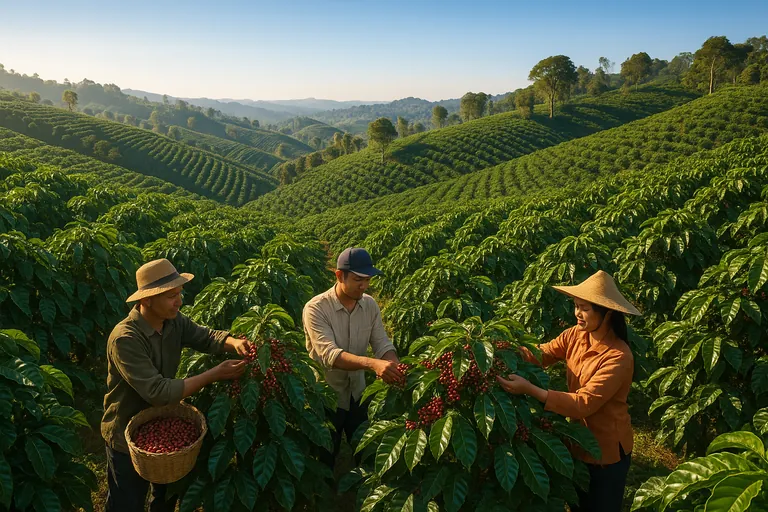
A step-by-step, Indonesia-tested blueprint to build a lean, audit-ready Internal Control System (ICS) that satisfies EU 2018/848 and USDA NOP group certification. What to document, who does what, how to calculate mass balance from cherry to green, and how to avoid the five mistakes that kill audits.
“We went from zero to dual-certified exports in one season using this ICS”
I’ve seen smallholder groups in Sumatra and Bali stall for years because their paperwork looked good but traceability cracked at the wet mill. The opposite is also true. With a lean Internal Control System that matches how coffee really moves in Indonesia, a 300–600 farmer cooperative can be audit-ready for EU 2018/848 and USDA NOP in one harvest cycle. Here’s the exact blueprint we use on the ground.
The 3 pillars of an audit-ready ICS
Pillar 1. People and separation of duties. You need clear roles.
- ICS Manager. Owns the Organic System Plan (OSP), risk assessment and corrective actions.
- Internal Inspectors. Independent from procurement. They visit 100% of farms annually and verify practices and records.
- Data Admin. Keeps the farmer register, parcel maps, purchase receipts, and mass balance up to date.
- Procurement QC. Controls intake at village wet mills and warehouses.
- Warehouse and Milling QC. Maintains physical segregation, batch coding and cleaning logs.
Pillar 2. Records and traceability. If it is not written, it did not happen. At minimum keep: farmer application and agreement, parcel register with maps, input approval list, internal inspection checklist and reports, training records, harvest and purchase receipts, wet mill logs, transport notes, warehouse intake, milling and blending sheets, mass balance register, sales invoices, and certificates. Tie every lot ID from farmer to export container. Link those IDs to TRACES COI and the NOP Import Certificate.
Pillar 3. Controls on the ground. The reality is that contamination happens in the first mile. Control entry points, cleaning and labeling. Prohibit commingling. Document what you clean, when you clean, and who signed.
Practical takeaway. Draw your flow from cherry on the tarp to green in the bag. Place a control and a record at every handoff. Then test it with a mock recall.
Weeks 1–2. Baseline mapping and validation
What is an Internal Control System for organic group certification?
An ICS is your in-house mini certification body. It sets the rules, trains farmers, inspects them, records purchases, controls processing, and keeps mass balance. Under EU 2018/848 and USDA NOP, certifiers can rely on your ICS if it is competent, documented and enforced. That is how grower groups with hundreds of smallholders remain audit-ready without external inspectors visiting every single farm.
Which ICS documents are mandatory to pass EU 2018/848 and USDA NOP audits?
From experience, these are non-negotiable:
- Organic System Plan for the group. Scope, processes, maps, subcontractors.
- Farmer application and signed producer agreement. Includes commitment to organic rules and sanctions.
- Parcel register with maps and GPS. Each plot tied to a farmer ID and area.
- Input approval list. What is permitted and where to buy it.
- Internal inspection checklist and annual inspection reports for 100% of members.
- Training plan and attendance records.
- Harvest and purchase records. Cherry weights per delivery, per farmer, with lot codes.
- Wet mill, drying, and storage logs. Cleaning and segregation records.
- Warehouse intake, milling reports, and blending sheets. Batch reconciliation.
- Mass balance register from cherry to green, by lot and by period.
- Noncompliance register and corrective actions with deadlines and verification.
- Residue testing plan and lab results with chain of custody.
- Sales records and certificates. TRACES COI or NOP Import Certificate references.
Tools we’ve found effective. Keep it simple and offline-first. KoboToolbox or ODK for farm surveys and inspections. Google Sheets for farmer register and mass balance. Numbered, carbon-copy purchase books at village wet mills. Photo evidence via WhatsApp pinned to lot IDs. Need help tailoring templates to your geography and process flow? If you want a quick read of your current ICS and a gap list, Contact us on whatsapp.
Weeks 3–6. Build the core and field test it
How many internal inspectors are needed for a 500-farmer cooperative?
Aim for one full-time internal inspector for every 80–120 farmers, depending on terrain and travel time. In Aceh hillsides, we plan at 80. In Bali Kintamani with clustered villages, 100–120 works. For 500 farmers, that means 5–7 inspectors to finish annual inspections plus follow-ups and spot checks before the external audit.
Create a route plan that covers 25–30 farms per inspector per week. Use a risk-based list to prioritize parallel producers, new members, and any farmer with a noncompliance last year.
How do we prevent contamination and commingling at village wet mills?
Here’s what works in Indonesia’s small wet mills.
- Separate intake points and tools. Color-code tarps, crates and tags for organic. Never accept mixed cherry. Reject policy in writing.
- Clean and record. Flush pulpers with a full run of organic cherry at the start of the shift. Log date, time, and person who signed.
- Dedicated fermentation tanks and drying areas. If you share, process organic first and record cleaning, then downtime before conventional.
- Tag every lot at receipt. Farmer ID. Date. Weight. Lot code. Keep tags all the way to parchment.
- Use new or dedicated sacks. Label sacks and pallets. Cover trucks. Keep transport notes with lot IDs.
- Weekly CAP drill. Do a mock recall from a warehouse pallet back to a farmer delivery. Fix weak links immediately.
If you need a benchmark for a certified supply chain and cup profile built under these controls, look at our Sumatra Arabica Organic Grade 2 Green Coffee Beans. We built its ICS to survive unannounced audits and tough residue screens.
Weeks 7–12. Scale, verify and close gaps
How do we calculate mass balance from cherry to green coffee in an ICS?
Use actual conversion factors from your mills and update them monthly. Typical Indonesia ranges:
- Fully washed Arabica. 5.0–6.0 kg cherry to 1 kg exportable green.
- Wet-hulled Arabica. 4.5–5.5 kg cherry to 1 kg green, depending on moisture and triage.
Method we use:
- Set a starting factor per process line using last season data.
- For each week, total organic cherry intake. Subtract documented rejects. Apply factor to predict expected green.
- Reconcile against actual green output after milling and sorting. Investigate variances over ±5%.
Example. Week 10, wet-hulled line.
- Cherry purchased: 12,500 kg. Rejects: 250 kg. Net: 12,250 kg.
- Factor: 5.2:1. Expected green: 12,250 ÷ 5.2 = 2,356 kg.
- Actual green produced: 2,290 kg. Variance: −66 kg (−2.8%). Within range. Document and move on.
Lock in mass balance by lot. Do not let weekly summaries hide lot-level leaks.
Can farmers in conversion be included and how are they labeled?
Yes. Keep them in the group as “in conversion” with separate status in the farmer register and on lot codes. Under EU rules, products can be marketed as “in conversion to organic” after 12 months of compliance when other conditions are met. Under USDA NOP, product cannot be sold as organic until 36 months after last prohibited input. No “transitional organic” claim unless your buyer runs a private program. Your ICS must separate mass balance and labels for conversion lots from fully organic lots at all times.
What ICS records are required to issue a TRACES COI or NOP Import Certificate?
For TRACES COI.
- Valid operator certificate and scope. Group member list available.
- Product, HS code, lot size and packaging details.
- Traceability pack. Farmer list contributing to the lot, purchase receipts, process logs, and mass balance.
- Transport plan and consignee data. CB will reference this to validate the COI.
For the NOP Import Certificate.
- Exporter and importer details, product and quantity, country of origin, certifier data.
- Lot IDs matching your sales contract and warehouse release.
- Mass balance evidence that quantity sold as organic does not exceed quantity purchased and converted.
- Any residue testing relevant to the lot. Under SOE, certifiers are paying closer attention to risk-based testing and chain of custody.
Practical takeaway. Keep a COI/NOP folder per export lot with every document from farmer purchase to container seal photos. Your external inspector will thank you.
The 5 biggest mistakes that kill organic group audits
- Parallel production without hard controls. Farmers who keep conventional plots need strict harvest-day separation and proof. Use different sacks and colored tags. Do spot visits on harvest days.
- Wet mill logs that do not exist on bad days. Procurements get busy and skip records. Assign a second person to audit logs daily and sign off.
- Static conversion factors. Yields change with rain and sorting. Update monthly and analyze variance.
- Inputs from “Pak Budi’s shop”. Your input approval list must be real. Keep invoices. If in doubt, quarantine.
- CAPs that never close. Every noncompliance needs a deadline, responsible person, and a verification note. No signature, no close.
Resources and next steps
If you want to see how a finished organic lot traces from farmer to container and how the paperwork lines up with the cup, request a cupping set that includes our Sumatra Arabica Organic Grade 2 Green Coffee Beans. Then match that against your current ICS and close gaps before the next harvest. Questions about your specific process flow or how to align records with COI and NOP Import Certificates by 2026? Contact us on email and we’ll share the lean templates we use with Indonesian cooperatives. You can also browse origins and profiles to plan your organic range here: View our products.
One final observation. The certifiers are moving toward deeper traceability checks and more unannounced visits. Groups that practice weekly reconciliation and mock recalls sail through. Groups that wait until audit month scramble. Start now, keep it light but real, and your ICS will become a competitive advantage, not a burden.