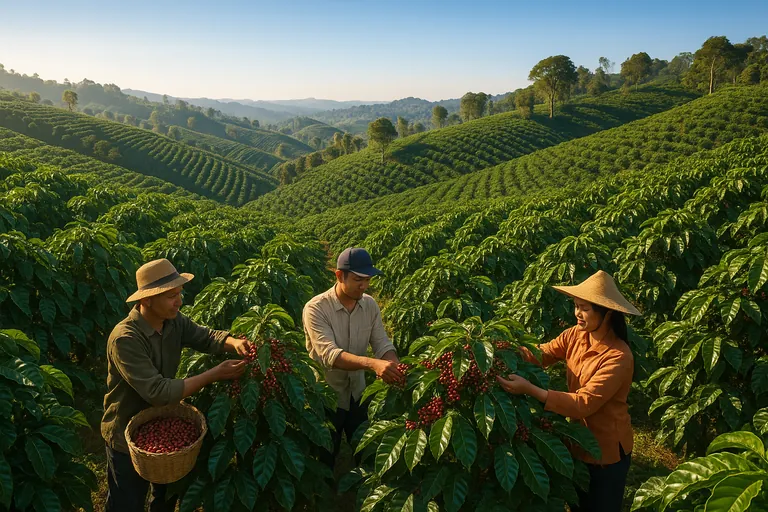
A practical, pass-the-inspection guide to securing Indonesia’s phytosanitary certificate for green coffee beans via IQFAST in 3–7 days. Exact steps, documents, timing, fees, inspection prep, and treatment options if pests are found.
If you export Indonesian green coffee in 2025, the one document that can stall your container at the last minute is the phytosanitary certificate. We’ve helped dozens of buyers and roasters clear this hurdle quickly. This is the exact, field-tested process we use to get an IQFAST e-phyto issued in 3–7 days without drama.
Why this guide focuses on phytosanitary (not general licensing)
Indonesia’s NPPO, now Badan Karantina Indonesia (often still called Barantan), controls phytosanitary certification for plant products. For coffee, the phyto is what import inspectors abroad look for to confirm freedom from quarantine pests and compliance with any treatment requirements. We’re not covering NIB/OSS business licensing, SKA/FTA, ICO, PEB or freight. This is a pass-the-inspection playbook for green coffee beans.
Do green coffee beans from Indonesia need a phytosanitary certificate?
Short answer. Often yes, sometimes no. It’s destination-specific. Many Asian, Middle Eastern and African markets require a phyto for HS 0901.11/0901.12 consignments. Some destinations don’t mandate it but buyers still request it to avoid holds at transshipment ports. Roasted and ground coffee are typically exempt, but a few buyers still ask for a PC. Always confirm the importing country’s current rules and your buyer’s SOPs before you book space.
Practical takeaway. When in doubt, apply. An issued e-phyto rarely hurts and often prevents delays.
What you need before you open IQFAST
In our experience, these are the documents that consistently get approvals moving:
- Commercial invoice and packing list with HS code 0901.11 (unroasted, not decaf) or 0901.12 (unroasted, decaf).
- Contract or purchase order naming the importer and destination country.
- Lot-level details. Bags per lot, net weights, origin districts (e.g., Aceh Gayo, Mandheling, Bali Kintamani), processing method.
- Warehouse address and planned port of loading. Example. Tanjung Priok, Tanjung Perak, Belawan, Makassar.
- Any importing-country requirements. Additional Declaration (AD) wording if requested, accepted treatments, or pre-shipment fumigation proof.
- ISPM-15 pallets if you’re using wood packaging.
- For IQFAST account setup. Company data that matches your legal registration and tax details. We won’t walk through OSS here, but IQFAST registration uses those credentials.
Insider tip. If your buyer needs a specific AD line such as “Free from live insects” or “Free from Hypothenemus hampei,” get that language in writing before you schedule inspection.
The 7-step IQFAST e-phyto workflow (3–7 days)
- Confirm destination rules. Check the importing authority’s portal or ask your broker to cite the regulation requiring a phyto and any AD. We also ask for last-season entries that cleared smoothly as a reference.
- Register or log in to IQFAST. Select plant products. Choose HS 0901 and the exact product description.
- Create an inspection request. Enter exporter, importer, warehouse, port, quantity, bag count and lot IDs. Upload invoice, packing list and PO. Enter AD wording if required.
- Pick inspection location and time. Warehouse checks are faster and let you fix findings on the spot. Port inspections work, but slots at Tanjung Priok fill fast 24–48 hours before cutoff.
- Pay PNBP fees. IQFAST generates a billing code. Pay via SIMPONI/virtual account. Typical spend for coffee consignments. IDR 150,000–500,000 for inspection and certificate issuance. Add lab/testing fees if sampling is required.
- Host the inspection. Inspectors verify identity, cleanliness, freedom from live insects and fungus, packaging/pallet compliance, and weight tallies. They may take samples. If treatment is required, they’ll instruct you to complete it and upload the treatment certificate.
- Receive e-phyto. After approval, Barantan issues the e-phyto. For many destinations, IQFAST sends it via the IPPC ePhyto Hub. We still print the PDF with QR code for the docs pack because some brokers love paper.
Timing we actually see. If you book a morning warehouse inspection and pay fees promptly, issuance in 1–3 working days is common. Add 1–4 days if fumigation or lab analysis is required. Plan 3–7 days end-to-end.
How long does the phytosanitary inspection take for coffee exports?
The visit itself is usually 30–90 minutes depending on lot count and sampling. The bottleneck is scheduling and any required treatment. At Tanjung Priok, same-week slots are normal if you book early. For harvest peaks, request 2–3 days ahead.
Documents required for coffee phyto in Indonesia
- Invoice, packing list, and purchase order.
- HS code 0901.11 or 0901.12 specified on the invoice.
- Lot map and bag list per lot.
- Warehouse address and port of loading.
- Any treatment certificates (if pre-fumigated) and ISPM-15 pallet marks.
- Additional Declaration text if your buyer requires it.
Nice-to-have. Internal QC sheets and moisture results. We keep moisture at or below 12.5% to avoid mold questions.
Can Barantan issue an e-phyto without a warehouse or port inspection?
No. Physical verification of the consignment is the rule. The only exceptions we’ve seen are administrative corrections or re-issuance due to clerical errors on an already-inspected lot. Assume an inspection is required.
If inspectors find live insects, what treatments are accepted?
This varies by destination and commodity policy, but we routinely see these options accepted for green coffee beans:
- Phosphine fumigation by a licensed provider under Barantan supervision. You’ll receive a quarantine treatment certificate to upload to IQFAST.
- Heat treatment when specified by the destination NPPO. Use caution. Heat can shift cup profile. We avoid this unless required.
- Irradiation. Accepted by some markets for disinfestation, but not common for coffee.
What about methyl bromide? Many markets restrict its use. Only use if expressly permitted by the destination NPPO and your buyer agrees. Always clear the treatment method before you proceed.
Additional Declaration samples you can adapt
Use destination wording. Examples we’ve seen requested for coffee beans:
- “The consignment was inspected and found free from live insects.”
- “The consignment was inspected and found free from quarantine pests, including coffee berry borer (Hypothenemus hampei).” Never improvise. Ask your buyer or broker for the exact clause accepted by their NPPO.
Validity and sending the e-phyto to the destination NPPO
Phytosanitary certificates are consignment-specific. Many countries require inspection and issuance within 14 days of shipment. IQFAST can transmit e-phyto data via the IPPC ePhyto Hub to participating NPPOs, including the U.S. APHIS system. We still share the PDF copy with QR code to the broker because it speeds up clearance.
Common rejection reasons and how to avoid them
- Live insects detected. Pre-sieve and aspirate, keep floors spotless, and load quickly after cleaning. Avoid storing near spices or dried foods that attract pests.
- Mismatch in quantities or HS code. Make sure invoice, packing list and IQFAST entries match bag counts and weights.
- Wrong or missing AD text. Get the clause in writing before inspection.
- ISPM-15 issues on pallets. Use stamped pallets only. No bark or unmarked repairs.
- Moisture or mold. Keep moisture ≤12.5% and use fresh, dry jute with liners. GrainPro liners help in humid warehouses.
In our experience, three out of five delays come from documentation mismatches rather than pest findings. A 10-minute pre-check saves days.
Does roasted or ground coffee require a phytosanitary certificate from Indonesia?
Generally no. Most NPPOs don’t require a PC for roasted or ground coffee. But if your buyer wants one for their internal controls, Barantan can inspect the packaged product. Confirm first. It’s rarely worth the time unless requested.
Inspection prep checklist we actually use
- Clean, swept warehouse with pallets off the floor and clear aisles.
- Bags labeled with lot ID, origin, and net weight. Random bags accessible for sampling.
- ISPM-15 pallets. No visible mold on jute. Liners intact.
- Rodent and insect traps in place and logged.
- Moisture meter and latest readings on hand.
- Printouts. Invoice, packing list, PO, and requested AD text.
If you want a head start, ship lots that are already uniform and clean. Our Arabica Bali Kintamani Grade 1 Green Coffee Beans and Blue Batak Green Coffee Beans are prepared with tight sorting and moisture control, which makes inspection straightforward.
Fees and how to pay PNBP for phyto Indonesia
- IQFAST issues a billing code after you submit the inspection request.
- Pay PNBP via SIMPONI or the virtual account shown in IQFAST.
- Typical range we see for coffee. IDR 150,000–500,000 for inspection and certificate. Add treatment and lab sampling if required. Costs vary by port and service level.
- Keep proof of payment. It speeds certificate issuance.
Scheduling at busy ports like Tanjung Priok
Warehouse inspection is faster. If you must inspect at port, request a slot 24–72 hours before your CY cutoff. Afternoon slots fill first. Morning slots give you a same-day buffer if anything needs rework.
Final takeaways
- Confirm destination rules and AD wording before you apply. Then everything else flows.
- Book warehouse inspection, pay PNBP immediately, and prepare a clean, accessible lot. Most e-phyto certificates issue within 1–3 working days post-inspection.
- If pests are found, phosphine fumigation with a licensed provider is the fastest, coffee-friendly option in Indonesia.
Need help with your specific situation or an urgent IQFAST application? You can Contact us on whatsapp. If you’re still evaluating origins, you can also View our products for clean, consistently prepared lots that make inspection easy.