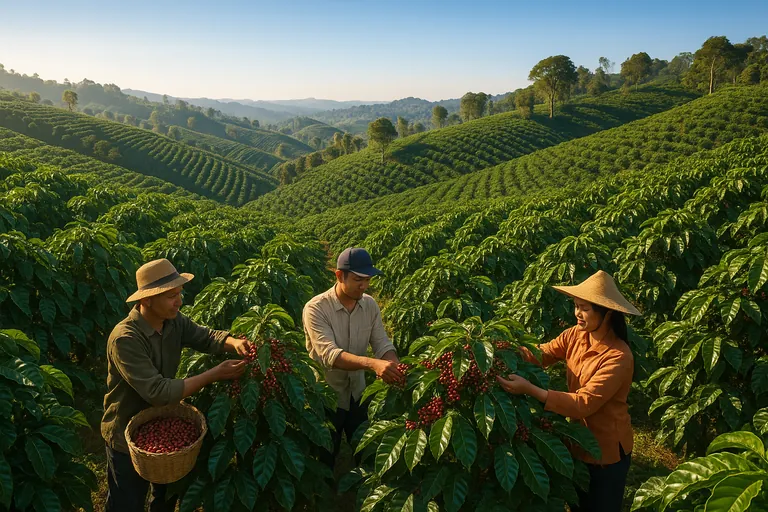
A practical, stomach-friendly guide to Flores Bajawa low acid coffee. Why its volcanic terroir and processing reduce perceived acidity, how to roast and brew for chocolate-tobacco-spice sweetness, and exact recipes that keep cups smooth without losing flavor.
If you love chocolate-forward coffee that treats your stomach kindly, Flores Bajawa belongs on your short list. We source and cup these lots every season, and the same thing keeps happening. The citrus stays quiet. The body gets syrupy. The aftertaste carries tobacco and soft spice instead of sharp fruit. That is why Flores Bajawa low acid coffee is getting so much attention from roasters and cafés that want smooth, crowd-pleasing cups without the sting.
Why Bajawa reads as low acid in the cup
Is Flores Bajawa considered a low-acid coffee?
Yes. In the cup, Bajawa shows low to medium acidity compared with many Latin American or African origins. The beans grow on the slopes around Ngada Regency, with rich volcanic soils and elevations that often sit between 1,200 and 1,600 meters. You will taste cocoa, pipe tobacco and gentle spice first. Any citrus rides in the background. That balance is what most drinkers describe as low acidity.
Quick reminder. When we talk about low acidity here, we mean perceived acidity. The pH of coffee changes far less than people think. But roast level, processing and brew method can dramatically shift how sharp or gentle a cup feels.
How does volcanic soil affect Bajawa’s acidity and flavor?
Volcanic soils around Mount Inerie are loaded with minerals like potassium and magnesium. In my experience, this supports slower cherry development and denser seeds. Denser coffee tends to carry more sugars and complex Maillard flavors at roast. This is why Bajawa leans chocolate, cedar, tobacco and baking spice rather than lemon and green apple. The terroir builds sweetness and structure, so the acids present feel round and integrated instead of bright or piercing.
Does wet-hulled processing reduce acidity in Bajawa coffee?
Often, yes. Wet-hulling shortens drying time and removes parchment earlier. That treatment mutes the sharper malic and citric edges and pumps up mouthfeel. You get darker chocolate, tobacco and earthy-spice complexity with medium to low perceived acidity. Many smallholders in Flores still wet-hull because the microclimate is humid and unpredictable.
You will also see fully washed Flores lots. These hold a touch more clarity and a soft citrus-chocolate interplay while staying gentle on acidity. If you want that style, review our current Flores Green Coffee Beans (Grade 1). They are fully washed with medium acidity and a strong body, and they roast into a wonderfully smooth, cocoa-first cup.
Takeaway. Processing shapes perception. Wet-hulled Bajawa is the lowest-acid expression with maximum body. Fully washed Bajawa stays smooth but offers a cleaner cup.
Flavor profile you can expect
Expect dark chocolate and cocoa nib up front. Tobacco and cedar in the mid-palate. Subtle baking spice and molasses on the finish. On washed lots, a hint of orange or soft lemon brightens the cup without turning it sharp. This profile makes Bajawa ideal for milk drinks and for drinkers who want depth without bite.
If you build chocolate-driven blends, Bajawa is a natural partner for Java or Lintong components. For reference points, see Sumatra Mandheling Green Coffee Beans or our Roasted Mandheling Coffee Beans for a similar dark chocolate and sweet tobacco direction.
What roast level is easiest on the stomach?
We recommend medium to medium-dark for Bajawa if you are prioritizing a stomach-friendly cup. End the roast around the end of first crack or tip into the earliest phase of second crack. That is the window where acids soften and the chocolate-tobacco-spice core blooms. Push too dark and you will trade acidity for ash and bitterness. Stay too light and the citrus peeks out while the body thins.
Practical numbers. Aim for a development time ratio around 20 to 25 percent with steady declining rate of rise. Keep charge temperatures conservative if your drum roaster easily overshoots. I have found that slightly longer post-first crack development on Bajawa builds syrupy mouthfeel without scorching.
Takeaway. Medium to medium-dark is the sweet spot for smoothness and sweetness. Reserve Nordic-light roasts for washed microlots where you specifically want aromatic clarity.
Brew methods that keep Bajawa low in acidity
Which brew method makes Flores Bajawa least acidic?
Immersion and cold methods typically read the least acidic. You are extracting more sugars and heavier compounds over time and at lower temperatures, which rounds edges.
- Cold brew concentrate. 1:6 ratio by weight. Coarse grind. Use 4 to 5 degrees Celsius water and steep 14 to 16 hours. Filter well and dilute with 1 to 1.5 parts water or milk to serve. Cold extraction keeps acids tame and emphasizes chocolate and spice.
- French press. 1:15 ratio. Water at 92 to 94 Celsius. Coarse to medium-coarse grind. Steep 5 to 6 minutes. Gently break the crust and skim fines before pressing. This keeps body high and acidity low without muddiness.
- AeroPress low-acid recipe. Inverted. 16 grams coffee to 200 grams water at 88 to 90 Celsius. 30 second bloom with a gentle stir. Cap at 60 seconds and press over 20 seconds. Use a paper filter for cleaner oils if your stomach is sensitive. Expect a smooth cocoa-led cup with a soft citrus lift.
How can I dial in Bajawa espresso to taste smooth, not sour?
Start cooler and a touch longer. Dose 18 grams. Yield 38 to 42 grams in 27 to 30 seconds. Brew at 90 to 92 Celsius. Keep your grind slightly coarser than for a typical bright Latin American single origin. If the shot tastes sharp, lengthen the ratio to 1:2.3 and decrease temperature by 1 degree. If it tastes bitter-flat, shorten to 1:2 and raise temperature by 1 degree. Bajawa tolerates milk beautifully, so a flat white or cappuccino will taste like dark chocolate with a light cedar-spice edge.
Water recipe for gentler cups
Water matters more than most people think. For low-acid perception, use water with moderate alkalinity that can buffer brightness without killing sweetness.
Target ranges. Alkalinity 40 to 60 ppm as CaCO3. Hardness 60 to 100 ppm as CaCO3. If you brew with reverse osmosis or distilled water, add a small bicarbonate concentrate.
Simple concentrate method. Dissolve 0.84 grams baking soda in 1 liter of distilled water to make a stock solution. It measures about 680 ppm as CaCO3 alkalinity. Add 60 milliliters of this stock to 1 liter of distilled water to hit roughly 40 ppm. Pair this with a magnesium source if you want extra extraction, but for comfort-first brewing, the bicarbonate alone already helps tame sharpness. If sodium intake is a concern, use potassium bicarbonate instead.
Takeaway. Immersion and cold methods plus moderate alkalinity water push Bajawa solidly into low-acid territory while preserving sweetness.
Common mistakes that make Bajawa taste sharp
- Roasting too light. You will bring out citrus that the terroir normally hides.
- Brewing too hot. Water above 95 Celsius can make even Bajawa feel edgy.
- Grinding too fine on immersion. Over-extracting fines raises astringency.
- Ignoring water. Ultra-soft water exaggerates acidity. Add a little buffer.
- Underdeveloped espresso ratios. Short 1:1.5 shots at high temperature can taste sour and salty.
Fixes are simple. Choose a medium or medium-dark roast. Use 92 to 94 Celsius water for filter. Keep immersion grinds coarse. Add alkalinity if you are using very soft water.
Is Flores Bajawa a good option for acid reflux or GERD?
Many of our customers with sensitivity prefer Bajawa over brighter origins. The combination of low perceived acidity, heavier body and chocolate-led flavor tends to feel gentler. That said, triggers vary by person. If reflux is an issue, start with cold brew or French press, pick a medium-dark roast and avoid highly concentrated espresso. And of course, follow guidance from your healthcare professional.
Why Bajawa is gaining international recognition
Three things are happening. First, quality consistency has improved. Better selective picking and tighter moisture control mean cleaner cups and more reliable green. Second, the flavor profile fits what cafés sell most. Chocolate-forward, low-acid espresso that cuts through milk without turning bitter is gold for bar programs. Third, producers in Flores are diversifying processing. You can now buy classic wet-hulled for syrupy body or opt for fully washed for a cleaner, cocoa-citrus balance. That flexibility helps roasters build both blends and single origin features.
From the exporter side, we see rising demand from buyers who want approachable specialty without high citrus. If that is you, review our current Flores Green Coffee Beans (Grade 1). For complementary profiles in the same comfort lane, compare with Java Preanger Grade 1 Green Coffee Beans or Sumatra Lintong Green Coffee Beans (Lintong Grade 1).
Next steps
If you are building a low-acid lineup or want cupping feedback on roast profiles, browse our origin options and availability. You can View our products to see current Flores and comparable lots. Need help choosing between wet-hulled and washed for your market or brew bar? Feel free to Contact us on whatsapp. We are happy to suggest lots and share roast curves that have worked well for our buyers.
Bottom line. Bajawa gives you a chocolate-tobacco-spice cup with low perceived acidity that is easy to dial for comfort and breadth. Roast it medium to medium-dark. Brew immersion or cold for the softest edges. Keep your water moderately alkaline. You will get a smooth, stomach-friendly coffee that customers actually finish and order again.