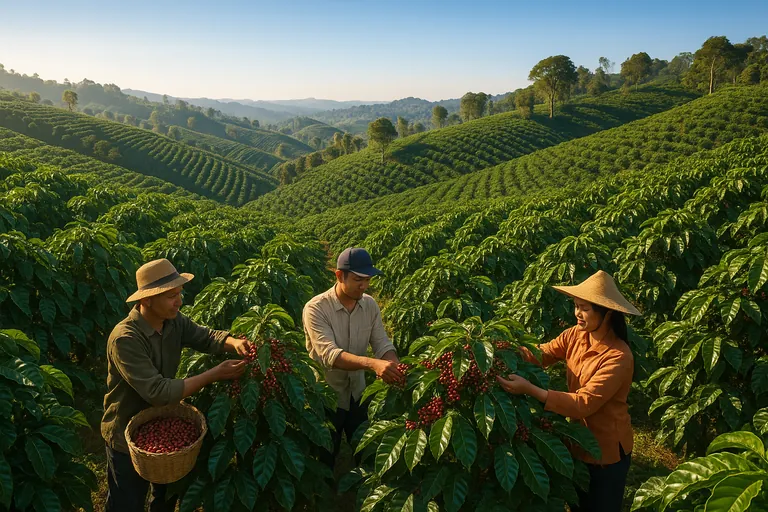
An action-first playbook for Indonesian exporters and US buyers to set up a compliant FSVP importer for green coffee in 2026. Who qualifies, how to appoint one, the exact documents FSVP agents ask for, and how to transmit the DUNS at entry (ACE/ABI + Prior Notice).
If you’re shipping Indonesian green coffee to the United States in 2026, FSVP is the gatekeeper. Get it right and your containers clear in hours. Get it wrong and you’re staring at holds, exams, and unhappy roasters. We’ve been living this for years on both sides of the ocean. Here’s the concise, hard-earned playbook we use with buyers and partners.
The 3 pillars of a smooth, compliant entry
-
Appoint a qualified US-based FSVP importer. This is the entity FDA will inspect. They must have a US address and a DUNS number. They’re responsible for hazard analysis, supplier approval, and ongoing verification.
-
Build a coffee-specific supplier verification file. Green coffee isn’t high-risk for pathogens after roasting, but ochratoxin A (OTA), pesticide residues, and foreign matter are real considerations. Your FSVP file should reflect that reality, not a generic HACCP.
-
Transmit the FSVP importer’s DUNS at customs entry. In ACE/ABI, your broker files the FDA Affirmation of Compliance code “FSV” with the importer’s DUNS. Prior Notice must also be submitted on time.
This sequence is what consistently prevents delays for Indonesian coffee.
Weeks 1–2: Choose and appoint the right FSVP importer (tools + templates)
Here’s the thing. The “FSVP importer” is not automatically the customs Importer of Record. By law, it’s the US owner or consignee of the food at the time of entry. If there isn’t one, you must appoint a US agent to be the FSVP importer in writing.
- Can a freight forwarder or customs broker be the FSVP importer? Legally, yes. In practice, most refuse, because they’d be subject to FDA inspection and program maintenance. Specialized FSVP agents or the buyer/roaster are the common choices.
- What will an FSVP agent ask for before they accept? Expect a short application, a service agreement, and a supplier questionnaire. Costs we’ve seen in the last year: USD 1,500–5,000 for setup, plus USD 150–250 per shipment for entry management, depending on complexity and whether they perform their own audits or testing.
Action you can take this week:
- Identify who will be the FSVP importer for each US customer. If your buyer won’t take it, shortlist reputable third-party FSVP agents and get written acceptance before you ship.
- Collect the FSVP importer’s DUNS number. They can obtain it free from Dun & Bradstreet. Typical turnaround is 1–5 business days.
Need help evaluating options for your project or getting a quick file review? You can Contact us on whatsapp. We’ll share what’s worked for similar Indonesian shipments.
Weeks 3–6: Build the coffee-specific FSVP file and run a mock check
In our experience, 3 out of 5 delays trace back to a generic food safety packet that doesn’t address coffee’s real hazards. Your FSVP importer needs a supplier file that shows you understand and control the right risks.
What documents do FSVP agents typically request for green coffee?
- Facility profile and process flow. From cherry reception to drying, hulling, sorting, storage, and packing. Include diagrams if possible.
- Current certificates. If applicable: organic, ISO 22000, HACCP, FSSC 22000, or equivalent third-party audit reports.
- Hazard analysis focused on coffee. Identify OTA as a chemical hazard. Note that roasting at destination is the kill step for pathogens. Address physical hazards like stones and metal.
- Verification activities and records. Moisture control procedures, drying parameters, storage controls, metal detection or density/air sorting, sieving, and visual defect grading. Show records, not just SOPs.
- Testing plans and COAs where relevant. OTA testing is not universally required by FDA, but many FSVP importers require it. Aim to meet or better common buyer specs (often guided by EU benchmarks of 5–10 µg/kg). Pesticide residue screening may be required by some retailers.
- Traceability and recall. Lot coding, shipping records, and a basic recall plan.
- Shipment documents. Commercial invoice, packing list, bill of lading, phytosanitary certificate, ICO mark where applicable.
Coffee-specific tips we’ve learned:
-
OTA is heat-stable. Don’t rely on the roaster to fix it. Your hazard analysis should show how you prevent OTA upstream: rapid drying to target moisture, covered patios or raised beds, water activity checks, and FIFO storage.
-
Show the physical hazard controls visually. Photos of density tables, destoners, and hand-picking lines help auditors trust your process.
-
Align specs to product reality. If you’re exporting Arabica Bali Kintamani Grade 1 Green Coffee Beans or Blue Batak Green Coffee Beans, include moisture specs, screen size distributions, and your defect limits. For aged profiles like Musty Cup Green Coffee Beans (Aged Arabica), describe storage conditions, rotation schedule, and OTA monitoring.
By the end of week 6, your FSVP importer should have approved you as a supplier and documented the verification activities they’ll rely on.
Weeks 7–12: Transmit data cleanly and scale without drama
This is where shipments either glide or grind.
How do you list the FSVP importer in the customs entry?
- In ACE/ABI, your broker files the FDA Affirmation of Compliance code “FSV” with the FSVP importer’s DUNS number. Example instruction to your broker: “Please transmit A of C code FSV with DUNS 123456789 for FSVP importer ‘ABC Roasters LLC, 123 Main St, City, ST.’” Use the same DUNS on every line that falls under that importer.
Is Prior Notice required for raw/green coffee beans?
- Yes. Prior Notice is required for all food for human consumption, including green coffee, even if it’s unroasted. Timing cutoffs are: 2 hours before arrival by road, 4 hours by rail or air, and 8 hours by vessel. Your broker can file in ABI or you can use FDA’s Prior Notice System Interface. Always share manufacturer/shipper details and the final recipient to avoid auto-holds.
Do Indonesian exporters need FDA food facility registration for green coffee?
- If your operation manufactures/processes, packs, or holds food for US consumption, registration generally applies. Most exporters that hull, sort, grade, and pack green coffee are considered foreign facilities and register. Farms are exempt. When in doubt, we register. It’s free, renewed every even-numbered year, and many FSVP agents will ask for your registration number in their file.
Where do FDA inspections happen under FSVP?
- At the FSVP importer’s US location. That’s why many brokers won’t act as FSVP importer. If the DUNS or FSV affirmation is missing at entry, shipments can be held while FDA requests clarification.
Quick answers to the questions we hear daily
Who can legally be the FSVP importer for green coffee shipped to the US?
The US owner or consignee at the time of entry. If none exists, a US agent or representative of the foreign supplier can be appointed in writing to act as the FSVP importer. They must have a US address and a DUNS.
Can my freight forwarder or customs broker act as the FSVP importer?
They can, but most won’t. If your buyer refuses, hire a specialized FSVP agent or service firm. Budget for setup and per-shipment fees.
What documents will a US FSVP agent ask from an Indonesian coffee supplier?
A coffee-focused hazard analysis, process flow, SOPs and records for moisture and OTA controls, physical hazard controls, third-party audits or certifications, COAs if testing is performed, traceability/recall plan, and facility registration details if applicable.
How do I add the FSVP importer’s DUNS number to my customs entry?
Tell your broker to submit FDA A of C code “FSV” with the DUNS as the value. Ensure the importer name and US address on the entry match the DUNS record.
Is Prior Notice required for green coffee beans?
Yes. Every shipment needs it, filed before arrival according to the mode of transport.
Are there any FSVP exemptions or modified requirements for small roasters or small suppliers?
There are modified FSVP options. If the US importer is a “very small importer” under FSVP (generally less than about USD 1 million in annual human-food sales, adjusted for inflation), or if the foreign supplier is a qualified facility, the importer may rely on certain supplier attestations and scaled verification. If the importer controls hazards after import, like pathogen kill during roasting, they’ll need written assurances and records of that control. None of this removes the need to identify hazards, approve suppliers, or keep records.
Is ochratoxin testing required for US coffee imports?
Not by default. FDA doesn’t mandate universal OTA testing for coffee, but FSVP importers often require it based on their risk assessment or customer standards. We recommend adopting an internal spec and periodic verification, especially for aged or natural-processed lots.
The 5 mistakes that quietly kill coffee shipments (and how to avoid them)
- Naming the customs broker as FSVP importer without their consent. Avoid last-minute holds. Secure a committed FSVP importer early and get their DUNS.
- Submitting a generic HACCP with no coffee hazards. Call out OTA, show moisture/water activity controls, and document physical hazard controls.
- Skipping Prior Notice on small parcels or samples. PN applies to commercial samples too. File early and include accurate consignee details.
- DUNS mismatch at entry. The DUNS must belong to the FSVP importer, not the exporter or the IOR. Ask your broker for a test transmission on your first shipment.
- Assuming “we’re small, so we’re exempt.” Modified FSVP is still FSVP. Keep written records, approvals, and assurances.
Resources and next steps
If you want a ready-made set of spec sheets, hazard analysis outlines, and QC records aligned to typical FSVP expectations, we can share templates we use for our Indonesian lots like Flores Green Coffee Beans (Grade 1) and Sumatra Mandheling Green Coffee Beans. When you’re ready to align origins and volumes to your buyer’s program, you can View our products and we’ll map compliance and logistics to the specific coffees you select.
The reality is, FSVP for coffee isn’t rocket science. But it is exacting. Choose a responsible US FSVP importer, build a coffee-specific verification file, and make sure your entry transmits the “FSV” A of C with the correct DUNS. Do those three, and 2026 should look like clockwork on your US lanes. And if you hit an odd scenario, we’ve likely seen it before. We’re happy to talk through it.