A practical 2026 buyer’s guide to sourcing Flores Arabica coffee wholesale from Indonesia, with real farm-level context, quality grades, MOQ, pricing, samples, and export logistics for roasters, importers, and café buyers.
If you’re evaluating Flores Arabica coffee wholesale for 2026, the short answer is this. Buy from an Indonesian exporter that can show you origin details, process specs, grade definitions, moisture and defect data, and a clear sample-to-shipment workflow. For most professional buyers, Flores is worth serious consideration when you want a clean, citrus-chocolate cup with fuller body than many washed coffees, typically grown around 1,200 to 1,700 masl and landing in the 82 to 85.5 cupping range for exportable commercial specialty lots. We source and cup Flores alongside Sumatra, Java, Sulawesi, Bali, and Papua, so this guide is built around what buyers actually need to compare before placing an order.
Why buyers keep shortlisting Flores Arabica
Flores sits in a useful middle ground for roasters. It gives you more brightness than many wet-hulled Sumatra profiles, but more body and chocolate structure than lighter, sharper coffees from some other origins. That makes it commercially flexible.
In our export program, Flores works well for three buyer profiles. Single-origin café roasters who want approachable acidity. Blend developers looking for citrus lift over a chocolate base. Importers who need a recognizably Indonesian Arabica that feels cleaner and easier to position than some earthier profiles.
Our current reference product is Flores Green Coffee Beans (Grade 1), a fully washed smallholder lot with fresh nutty fragrance, citrus-chocolate cup character, medium acidity, and strong body. If you’re comparing it against other Indonesian washed Arabicas, Arabica Java Ijen Grade 1 Green Coffee Beans is usually a helpful benchmark because Ijen tends to cup cleaner and sharper, while Flores often feels broader and sweeter in body.
Technical questions buyers ask before they shortlist a supplier
Where can I buy Flores Arabica coffee wholesale in Indonesia?
The best route is a direct exporter with active origin relationships in Flores, not a generic trading desk that can only forward a price sheet. We recommend asking for four things immediately. Growing area, processing method, current crop timing, and pre-shipment QC data.
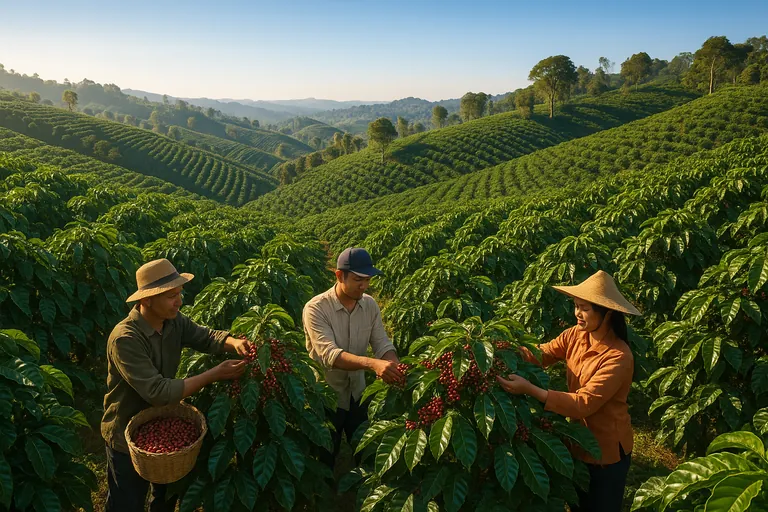
For Flores, we typically source from smallholder networks in Ngada, Bajawa, and Manggarai. Most lots we prepare for export come from coffee grown at 1,250 to 1,600 masl, with selected higher parcels reaching closer to 1,700 masl. The most reliable washed profiles usually come from buyers who maintain disciplined cherry selection and raised-bed or patio drying protocols at village level or nearby wet mills.
What is the minimum order quantity for Flores Arabica coffee?
For wholesale export, the practical MOQ depends on whether you’re buying samples, trial volume, or containerized volume. For most buyers, sample sets start at 300 g to 2 kg per lot. Trial orders often begin at 30 kg to 60 kg if consolidated with other Indonesian coffees, while a dedicated export lot is more commonly 1 bag to 10 bags, then 1 FCL once the relationship is established.
From a logistics perspective, many first-time buyers reduce freight risk by combining Flores with other origins. For example, a roaster testing Flores for filter and Java for blends may pair it with Arabica Java Ijen Grade 1 Green Coffee Beans or a body-driven coffee like Sulawesi Toraja Green Coffee Beans (Sulawesi Toraja Grade 1).
How does Flores Arabica coffee grade affect quality?
This matters more than many new importers realize. In Indonesian export trade, grade affects defect tolerance, consistency, screen distribution, and roast predictability. A Grade 1 Flores lot should give you tighter physical prep, fewer primary defects, and more consistent cup performance across bags.
In practical roasting terms, that usually means less sorting loss, fewer quakers, and narrower roast deviation between batches. In our cupping, well-prepared Flores Grade 1 commonly shows citrus, cocoa, brown sugar, light spice, and a medium acidity with solid body. Lower grades may still be useful commercially, but they can flatten the cup and increase inconsistency in production roasting.
What cupping score should I expect from exportable Flores lots?
For mainstream exportable specialty-commercial Flores, a realistic range is 82 to 85.5 SCA. Microlots can go higher, but serious buyers should be cautious when every offer is suddenly “86+” without farm separation, cupping sheets, or roast references.
What most buyers overlook is that cup quality in Flores can vary significantly by harvest timing and drying discipline. Early-harvest lots may show sharper citrus and greener edges if rushed. Better lots from the heart of the season usually taste more integrated.
Can I request samples before ordering Flores Arabica coffee wholesale?
Yes, and you should. Any serious Flores Arabica wholesale supplier should support a sample workflow before contract volume. We typically recommend three-stage sampling. Pre-shipment offer sample, approval sample from the assembled lot, and post-production reference sample retained against shipment.
If you want to taste current availability or compare Flores against other Indonesian origins for your menu, Contact us on whatsapp. That’s usually the fastest way for us to match you with suitable lots and sample options.
Content questions that affect buying decisions
What flavor profile should a roaster expect from Flores Arabica?
The commercial sweet spot is a cup with orange or mandarin-like citrus, milk-to-dark chocolate, toasted nut, and a round, full body. Acidity is usually medium rather than high. Compared with Bali Kintamani, Flores is often a little less sparkling but more grounded in body. Compared with Mandheling, it’s cleaner and brighter.
Here’s what this means for your roastery. Flores is often easier to place in both espresso and filter programs than buyers expect. We’ve seen it work particularly well as a single-origin omni roast for cafés that want one Indonesian Arabica with broad customer appeal.
What harvest window should I plan around for 2026?
For Flores, the main harvest generally runs May to September, with some local variation by district and altitude. Export-ready fresh-crop flow is usually strongest from July through November after milling, sorting, and stabilization.
If you’re trying to secure the best lots, don’t wait until every importer is shopping the same window. We advise buyers to start conversations before the harvest peaks, especially if they need a specific process style or cup target.
Is Flores always fully washed?
No. While many export buyers look for fully washed Flores because it gives the cleanest and most repeatable profile, there are also natural and experimental lots in smaller volume. For wholesale programs, washed remains the safest choice if consistency matters more than novelty.
That’s one reason our Flores Green Coffee Beans (Grade 1) remains the most straightforward option for buyers asking how to buy Flores Arabica coffee green beans for year-round roasting.
How does Flores compare with other Indonesian Arabicas?
If you’re building a balanced Indonesian lineup, Flores fills a different role from Sumatra or Bali. Sumatra Mandheling Green Coffee Beans typically brings lower acidity and earthier chocolate depth. Arabica Bali Kintamani Grade 1 Green Coffee Beans often gives brighter citrus and a lighter feel. Flores usually sits between them, with enough brightness for clarity and enough body for comfort.
How do I verify the authenticity of a Flores supplier?
Ask for evidence that connects the lot to origin and export readiness. We suggest requesting farm or collector area names, process details, moisture range, defect count basis, crop timing, and photos or videos from the collection or milling stage. A real supplier should also be comfortable discussing bag markings, packing type, and shipment documents.
From our side, authenticity means buyers can trace not only the island, but the district profile and preparation standards behind the lot. If a supplier can’t explain whether the coffee is coming from Bajawa, Ngada, or Manggarai, that’s a warning sign.
Growth questions. Pricing, margins, and product fit
What price range should I expect for wholesale Flores Arabica coffee in 2026?
For Flores Arabica coffee price per kg, expect the final number to depend on grade, process, lot size, packing, destination port, and whether you’re buying mixed-container or dedicated volume. For 2026 planning, many buyers should budget roughly USD 6.80 to USD 9.50 per kg FOB Indonesia for export-grade washed Arabica, with standout microlots above that.
At the lower end, you’re usually looking at broader commercial prep or larger-volume tradeable lots. At the higher end, you should expect stronger physical prep, clearer lot identity, and more stable cup performance. If a quote comes in far below market, check whether it excludes inland transport, export handling, or uses vague grade language.
How does wholesale pricing compare with retail or roasted buying?
Green wholesale is where roasters maintain the most control over margin and profile. Finished roasted coffee makes sense for distributors or hospitality buyers who don’t roast in-house, but not for a roastery building its own signature line.
If you want to compare origin economics across Indonesia before committing, View our products. Buyers often evaluate Flores alongside Java, Bali, Sulawesi, and Sumatra to decide whether they want brightness, body, or a blend component.
Is Flores better as a single-origin or blend component?
Both, but the answer depends on your market. In retail single-origin programs, Flores appeals because the profile is accessible and distinctly Indonesian without being too polarizing. In blends, it can add sweetness and body while preserving some top-note citrus.
What certifications should I ask about?
Not every excellent Flores lot carries formal certifications. For many specialty buyers, lot transparency and quality data matter more than a generic claim. That said, if your market requires organic, food safety, phytosanitary, or specific importer documentation, confirm that before contracting.
What margins do cafés usually get from Flores-based menu offerings?
In café programs, Flores tends to perform well because it can satisfy both black-coffee drinkers and milk-based drinkers. That broader appeal often lowers menu risk. From a sourcing perspective, a dependable washed Flores can be easier to sell through than more divisive Indonesian profiles.
Business questions. Export, paperwork, and risk control
What are the export regulations for Flores Arabica coffee from Indonesia?
For standard commercial export, buyers typically need a supplier who can handle commercial invoice, packing list, bill of lading, certificate of origin when required, phytosanitary documentation when required by destination, and fumigation or other compliance documents if applicable. Requirements vary by market, so the destination country matters.
What helps buyers most is working with an exporter that manages both the coffee and the paperwork. The coffee can cup beautifully, but if labeling, HS code usage, or document timing is sloppy, clearance delays can wipe out your advantage.
What shipping options are realistic for first-time buyers?
For first purchases, most buyers choose either LCL with mixed origins or palletized trial shipments where the economics still make sense. Once your roast data and sell-through are proven, moving to larger FOB or CIF contracts is usually more efficient.
How do I reduce risk on my first Flores order?
Approve against a named lot. Match sample to contract language. Confirm moisture, bag count, net weight, and packing format before shipment. Keep a retain sample.
This sounds basic, but it prevents most avoidable disputes.
How long is the shelf life for well-prepared Flores green coffee?
With moisture around 10 to 12%, stable water activity, GrainPro-style inner protection where requested, and clean warehouse handling, good Flores green coffee should remain commercially sound for many months. The cleaner washed profile tends to hold better than poorly dried coffees.
What’s the smartest next step if I’m still comparing suppliers?
Don’t decide from a PDF alone. Compare a real sample set, ask origin-specific questions, and judge how clearly the supplier answers. The right Flores Arabica coffee direct farm source partner should make your buying process easier, not murkier.
Myth-busting. What buyers often get wrong about Flores
Myth 1. All Flores coffee tastes the same. It doesn’t. Bajawa-style lots can cup differently from Manggarai material depending on altitude, cultivar mix, and drying discipline.
Myth 2. Grade only affects appearance. It affects roasting consistency, sorting loss, and customer experience.
Myth 3. The cheapest FOB offer is the best sourcing decision. It often becomes the most expensive once defects, shrinkage, and inconsistency show up.
Quick-start checklist for buying Flores Arabica wholesale
- Define your target use. Single-origin, espresso, or blend.
- Ask for origin details. District, altitude, harvest months, process.
- Request QC data. Moisture, defects, screen, cup score.
- Cup an offer sample and an approval sample.
- Confirm MOQ, packing, Incoterm, and shipment schedule.
- Match documents to your destination market before loading.
If you’re evaluating Flores Arabica coffee export Indonesia options for 2026, our advice is simple. Start with a sample and compare it against your current Indonesian lineup. Buyers who do that usually make faster, safer decisions than those who buy on description alone. If you want lot details, sample availability, or a practical discussion about minimum order quantity Flores Arabica, Contact us on email.