A practical 2026 buying guide for roasters and importers sourcing Sulawesi Robusta coffee wholesale, with pricing ranges, grade impact, MOQ, export requirements, quality checks, and supplier selection tips from an Indonesian exporter.
If you're evaluating Sulawesi Robusta coffee wholesale in 2026, the short answer is this. Expect exportable commercial lots to trade broadly around USD 3.20 to 5.40/kg FOB Indonesia depending on grade, screen size, prep, moisture, and container volume. For most buyers, the real decision points are not just price. They are cup profile, defect tolerance, supply consistency, and whether your supplier can document quality before shipment. From our side as Indonesia-Coffee, we treat Sulawesi Robusta as a fit for espresso blends, RTD bases, soluble applications, and value-driven dark roast programs when buyers want more spice and structure than standard southern Sumatra lots.
What does Sulawesi Robusta actually taste like, and who should buy it?
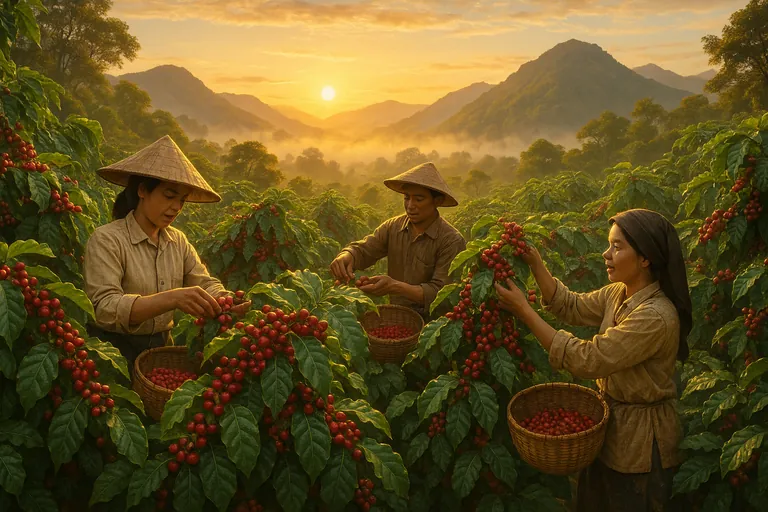
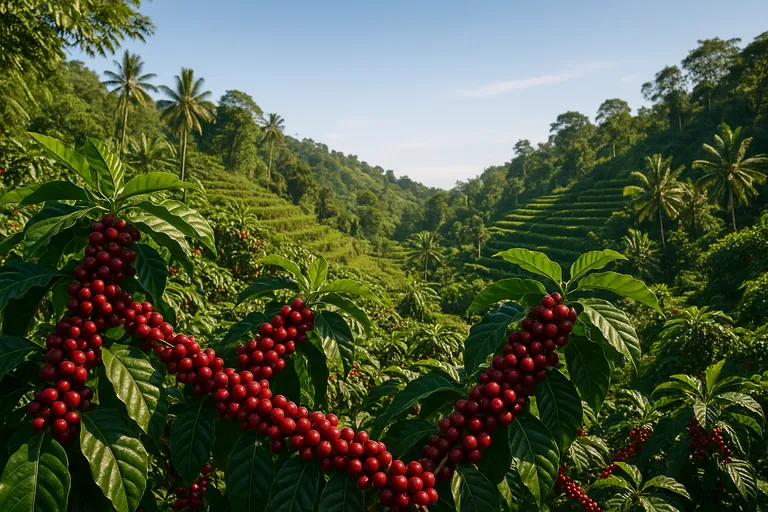
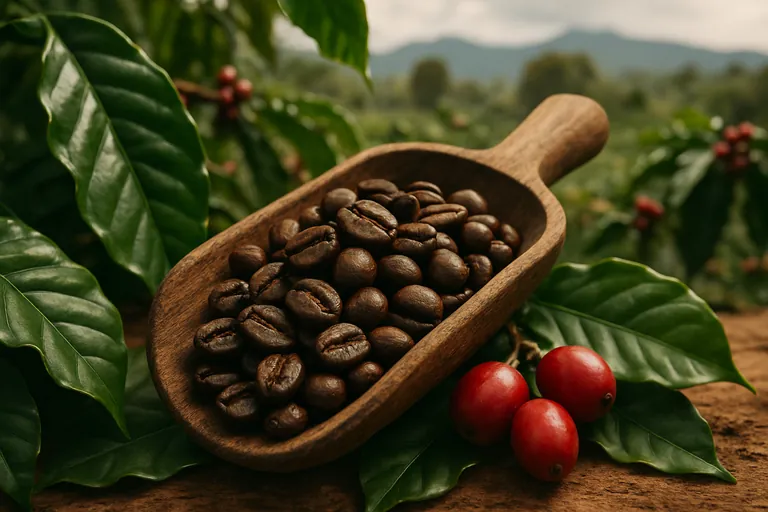
Sulawesi Robusta is usually bought for functionality first, but the better lots absolutely have a distinct cup identity. In the cleanest natural and carefully dried lots we source from South and West Sulawesi smallholder networks, we typically cup 78 to 82 points, with heavier body, dark cocoa, roasted nut, dried herb, light earth, and a peppery finish. Acidity is low. Bitterness can be firm, but on better prep lots it stays controlled rather than harsh.
Compared with Robusta Lampung Green Coffee Beans (ELB & Grades 2–4), Sulawesi Robusta is often less smoky and slightly more spice-forward. Compared with Robusta Sidikalang Green Coffee Beans (Grade 2), it is usually less syrupy and less earthy, but can show a drier cocoa finish that works well in high-percentage Robusta espresso blends.
Here's what this means for your roastery. If you need crema, body, cost control, and a more differentiated Indonesian Robusta profile for house blends, Sulawesi is worth sampling. If you need the most standardized industrial profile, Sumatra Robusta may still be easier to repeat at larger scale.
If you want to compare Indonesian Robusta options side by side, you can start with View our products and short-list which profile best fits your blend target.
What is the average wholesale price for Sulawesi Robusta coffee in 2026?
What should buyers budget FOB in 2026?
For 2026, our working buyer guidance is:
- Lower commercial prep lots: around USD 3.20 to 3.80/kg FOB
- Cleaner Grade 2 style export lots: around USD 3.80 to 4.50/kg FOB
- ELB-style or better-prepared specialty-commercial Robusta lots: around USD 4.50 to 5.40/kg FOB
Those are realistic planning numbers, not a fixed price list. Final pricing depends on shipment month, domestic cherry competition, exchange rate, and whether you're buying FCL or trial volume.
What most buyers overlook is that Sulawesi pricing can move faster during active harvest procurement because farmer selling behavior is less uniform than in larger Robusta hubs. We see this especially when rainfall disrupts drying or when local traders compete aggressively for clean parchment-equivalent material.
Why can two Sulawesi Robusta offers look similar but price very differently?
Usually it comes down to five things.
- Defect count and hand-sorting level. A visually cleaner lot costs more because labor costs rise sharply.
- Screen size distribution. More uniform bean size improves roast consistency.
- Moisture stability. We target export-safe moisture, typically 12 to 13% max, because unstable lots become expensive after arrival.
- Drying discipline. Slow, even drying reduces phenolic harshness.
- Volume commitment. A 1-container program prices better than repeated sub-container buying.
From a sourcing perspective, a cheaper lot is often not cheaper after roast loss, sorting loss, and blend inconsistency are factored in.
How does Sulawesi Robusta coffee grade affect wholesale price?
What grade differences matter most to roasters?
In practice, buyers should focus less on the label alone and more on the underlying prep specs. For Sulawesi Robusta, the commercial spread is usually driven by:
- Screen size, often in the 15–19 range for export grades
- Defect tolerance
- Moisture content
- Foreign matter and triage percentage
- Cup cleanliness
A better-prepared lot with more uniform screen and lower secondary defects will roast more evenly and produce fewer bitter spikes in the cup. That matters most if you're using 20 to 50% Robusta in espresso blends.
What grade should different buyers choose?
- Cafés and artisan roasters. Buy cleaner Grade 2 or ELB-style prep if Robusta is visible in the flavor profile.
- Commercial blend houses. Grade 2 to Grade 3 can be acceptable if your roast is dark and the coffee is a minor blend component.
- Soluble and extract buyers. Value often matters more than visual appearance, but moisture and defect control still matter for yield and storage.
We often advise buyers comparing Sulawesi with Sumatra to benchmark against Sumatra Robusta Green Coffee Beans because it gives a practical reference point for body, screen consistency, and blend behavior.
What is the minimum order quantity for Sulawesi Robusta coffee wholesale?
Can I buy less than a container?
Yes, but the economics change. For most export programs, the practical Sulawesi Robusta coffee MOQ falls into three tiers:
- Samples: 300 g to 2 kg per lot
- Trial orders: 1 to 5 bags if combined with other Indonesian coffees or moved under shared export arrangements
- Standard wholesale orders: typically 20-foot container volume, depending on bag weight and consolidation plan
For direct-origin buyers, the most workable first order is usually not a full Sulawesi-only container. It's a mixed program. For example, some roasters pair Sulawesi Robusta with Sulawesi Toraja Green Coffee Beans (Sulawesi Toraja Grade 1) or Sulawesi Kalosi Green Coffee Beans (Toraja Kalosi) to build an Indonesia-focused offering in one shipment.
If you're at the sample or first-import stage and want to check whether mixed-origin consolidation is possible for your market, Contact us on whatsapp and we can tell you what is realistic based on destination port and volume.
Where can I find a reliable Sulawesi Robusta coffee supplier?
What should you verify beyond the sales pitch?
A reliable Sulawesi Robusta coffee supplier should be able to answer seven questions clearly.
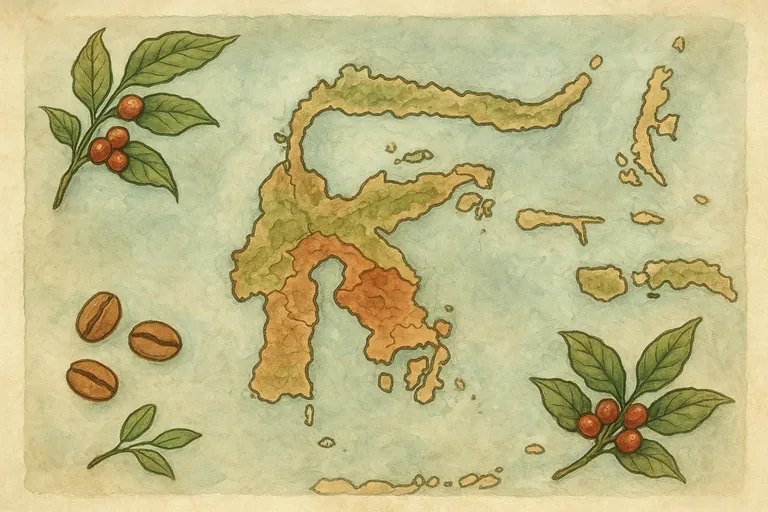
- Which regencies and villages is the coffee sourced from?
- Is the lot fully traceable to farmer groups, collectors, or a named dry mill?
- What are the exact moisture, screen, and defect specs?
- Can they provide current crop and past-crop samples?
- Do they pre-ship cup and re-check before stuffing?
- Can they export consistently, not just source occasionally?
- Will they tell you honestly when Sulawesi is not the best fit?
That last point matters. We don't position Sulawesi Robusta as the answer for every buyer. If you need larger-volume Robusta with easier repeatability, we may recommend Lampung or Sumatra instead. If you want a fuller Indonesia menu, we can also build mixed shipments with Arabicas such as Java Preanger Grade 1 Green Coffee Beans or Sumatra Mandheling Green Coffee Beans.
Our team visits producing regions, cups arrival samples, and checks export prep before shipment. That matters because a good farm-side cup can still degrade if drying, storage, or bagging is rushed.
How can I verify quality before buying wholesale?
What should be included in your pre-purchase check?
For buy Sulawesi Robusta green coffee decisions, we recommend a four-step verification process.
1. Cup two roast levels. One medium and one darker test roast. Sulawesi Robusta can look acceptable at dark roast but reveal harsh phenolics at medium.
2. Ask for the physical sheet. You want screen distribution, moisture, defect count, and any sorting-loss estimate.
3. Request crop timing. Fresh crop and late-harvest lots behave differently in storage. In Sulawesi, Robusta procurement commonly centers around May to September, though local timing shifts by microclimate and drying conditions.
4. Compare against a control coffee. Buyers make better decisions when Sulawesi is cupped beside Sumatra Robusta or a familiar Vietnam or Uganda benchmark.
Our export QC standard is to align pre-shipment sample approval with the production lot as closely as possible, then re-check moisture and visual prep before stuffing. That reduces one of the biggest buyer complaints in origin trade: approved sample, different container.
If you want a current crop sample set or need help comparing Sulawesi against Sumatra Robusta for your blend, Contact us on email and we can suggest the most useful sample lineup.
Are there export certifications needed when importing Sulawesi Robusta coffee?
What documents do importers usually need?
For Sulawesi Robusta coffee export, the exact requirement depends on destination country, but most shipments typically need:
- Commercial invoice
- Packing list
- Bill of lading
- Certificate of origin when requested
- Phytosanitary certificate if your market requires it
- Fumigation or additional treatment documents if applicable
Some buyers also need residue, organic, or sustainability documentation. Those are program-specific rather than automatic. If you're importing into the EU, Middle East, East Asia, or North America, the compliance checklist is not identical, so it's better to confirm before contracting.
What this means for your purchasing manager is simple. Supplier reliability includes paperwork reliability. A supplier who can't clearly map documents, HS code usage, and port handling timelines is still a sourcing risk even if the coffee cups well.
How reliable is Sulawesi supply in 2026?
What are the real supply risks?
Sulawesi can be a smart buy in 2026, but buyers should plan around three realities.
First, supply is more fragmented than larger Indonesian Robusta hubs. Second, drying quality can vary sharply during wet weather. Third, truly clean lots are available, but they require stricter sorting and therefore tighter booking windows.
When we build Sulawesi offers for overseas buyers, we usually qualify them by use case. For espresso blend buyers, supply is workable if you book early and accept that top-prep volumes are not unlimited. For industrial buyers needing highly standardized large tonnage every month, Sulawesi is often better as part of a broader Indonesia sourcing strategy rather than a sole-origin program.
The practical buying takeaway for 2026
Sulawesi Robusta makes sense when you want Indonesian Robusta character with more spice and cocoa structure than many commodity-style offers, and when you're willing to buy on real specs rather than just origin name. In 2026, the best buyers will compare by cup, defect tolerance, moisture stability, and shipment reliability, not just by the lowest FOB number.
If you're narrowing suppliers, ask for current crop samples, physical specs, harvest timing, and a realistic MOQ plan. That's the fastest way to separate traders with occasional access from exporters who can actually support repeat orders.
If you'd like, we can help you build a practical sample set around Sulawesi Robusta, Sumatra Robusta, and Sulawesi Arabica counterparts so your team can cup them in the context that matters most: your actual blend program. Start by exploring View our products and we can take it from there.