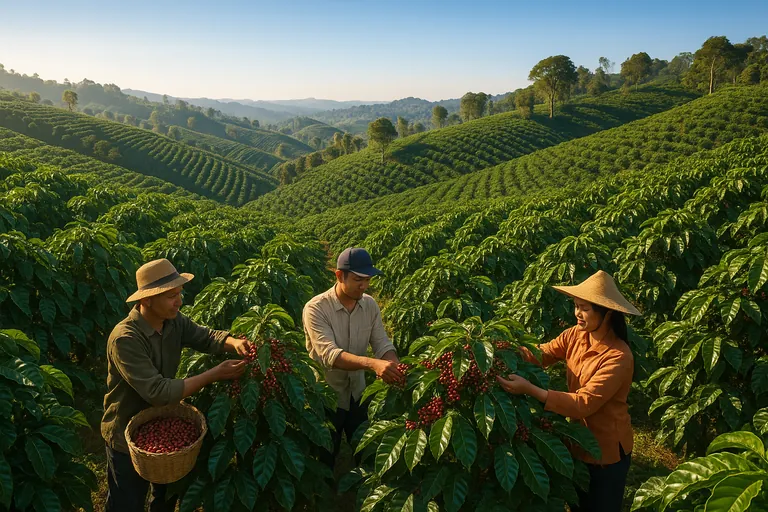
A practical buyer’s guide to Bali Arabica green beans wholesale in 2026. Learn grades, MOQ, pricing context, harvest timing, certifications, sample options, and how to verify Kintamani lots from a direct Indonesian exporter.
If you're asking where to buy Bali Arabica green beans wholesale, what grade to expect, and whether the price fits your roasting program, the short answer is this. Buy from a supplier who can show you the exact Kintamani area, process, moisture, defect count, harvest timing, and sample consistency before you commit. For most specialty roasters in 2026, the most reliable wholesale Bali Arabica comes from Kintamani smallholder lots in Bangli, typically 1,100 to 1,500 masl, with clean citrus-driven cups scoring around 82 to 85.5 depending on process and selection.
We export these coffees directly from Indonesia, and Bali is usually chosen by buyers who want a brighter, cleaner Indonesian profile than classic wet-hulled Sumatra. Here’s what actually matters before you place a container, pallet, or trial order.
Why buyers use a FAQ format for Bali Arabica sourcing
Bali Arabica green beans wholesale is rarely a branding decision first. It’s a QC and fit decision. Buyers usually need fast answers on grade, MOQ, certifications, cup profile, and export readiness before they even ask for a quote.
That’s why we’ve structured this as practical buyer FAQs. It mirrors the real sourcing process our export team handles with roasters and importers every week.
Technical buyer questions
Where can I buy Bali Arabica green coffee beans wholesale?
The best route is a direct Bali Arabica wholesale supplier with farm and processing access in Kintamani, not a generic trader listing “Bali origin” without lot details. We work with smallholder networks in Ulian Village, Kintamani District, Bangli, where most of the exportable specialty Arabica is grown under shade alongside citrus and mixed crops.
For buyers who want a washed profile, our Arabica Bali Kintamani Grade 1 Green Coffee Beans is the clearest starting point. For roasters looking for a fruitier dry-process expression from the same area, see Bali Natural Green Coffee Beans.
What this means for your roastery is simple. If the supplier can’t tell you village, altitude band, process protocol, and current lot availability, you’re not yet buying with enough transparency.
What grades of Bali Arabica coffee are available for wholesale?
For specialty export, the most commonly requested Bali Arabica coffee grade is Grade 1. In practical buying terms, that means tighter defect tolerance, better screen consistency, and more reliable roast behavior.
In Kintamani we usually see buyers split demand across three commercial categories.
- Grade 1 fully washed. Best for specialty single-origin menus and higher-acidity blends.
- Natural or experimental lots. Best for micro-roasters and limited releases.
- Lower commercial grades or mixed screens. Best when price matters more than cup precision.
Our Bali Grade 1 lots are typically hand-sorted, moisture-controlled to export-safe levels, and cupped for clean citrus, orange peel, light molasses, toast, and balanced sweetness. On better lots, we cup 83 to 85+. Naturals can show more berry-like fruit and chocolate but usually require closer roast management.
How do I verify Bali Arabica coffee grade for wholesale?
Ask for more than a cupping sheet. Grade verification should include green analysis, defect count, moisture, screen size, and process notes.
When we prepare Bali lots for export, buyers usually request these checkpoints.
- Harvest window. Main Bali Arabica harvest typically runs May to August, with some early and late picking around adjacent months depending on rainfall.
- Altitude range. Most specialty Kintamani Arabica for export sits around 1,100 to 1,500 masl.
- Moisture. Usually targeted around 11 to 12.5% for shipment stability.
- Defects. Grade 1 should be clearly documented.
- Cupping range. Specialty Bali lots commonly score 82 to 85.5.
- Processing traceability. Washed, natural, honey, or controlled fermentation should be stated clearly.
What most buyers overlook is process consistency across smallholder lots. Bali can cup beautifully, but mixed cherry maturity or inconsistent drying will show up quickly in the roaster. Always ask whether the lot was consolidated from one village, one collection point, or multiple processors.
If you want to evaluate current Bali lots for your menu, Contact us on whatsapp and we can share available specs and sample options.
What certifications should I expect from Bali Arabica coffee suppliers?
This depends on your market. For most buyers, the baseline isn’t a consumer-facing certification. It’s export documentation, phytosanitary compliance, and traceable lot records.
For specialty Bali Arabica, certifications and documents may include.
- Phytosanitary certificate.
- Certificate of origin.
- Fumigation documentation if required by destination market.
- Food safety and export packing records.
- Organic documentation only when the lot is genuinely certified, not merely “grown traditionally.”
Some Kintamani coffee has a strong geographical identity in the market, but buyers should still verify the individual exporter’s paperwork and lot chain. Don’t assume every “Bali Kintamani” offer carries the same compliance standard.
What is the minimum order quantity for Bali Arabica green beans?
Bali Arabica MOQ wholesale depends on whether you’re buying samples, trial bags, partial pallet, or full-container export. In our experience, specialty roasters usually start with sample volumes, then move to bag-level trial orders before committing to larger shipments.
Typical structures in the market look like this.
- Samples. 200 g to 2 kg for lab roasting and cupping.
- Trial wholesale order. Often 5 to 20 bags.
- Full export shipment. Commonly one pallet upward, or FCL depending on origin mix and destination.
The right MOQ isn’t just a logistics number. It affects lot homogeneity. If you need repeatability for a seasonal single-origin program, it’s better to reserve more of one lot than buy very small repeat orders from changing stock.
Content questions buyers actually ask
What cup profile should I expect from Bali Arabica?
Bali Arabica coffee flavor profile for roasters is usually cleaner and brighter than many buyers expect from Indonesia. Good Kintamani washed lots show orange, lemon, light floral notes, molasses or brown sugar sweetness, and a medium body with bright acidity.
That profile is why some roasters choose Bali over lower-acidity Sumatra for filter offerings. By comparison, Sumatra Mandheling Green Coffee Beans brings more chocolate, earth, and softer acidity, while Java Preanger Grade 1 Green Coffee Beans often sits in a floral, caramel, spice direction.
Here’s what this means for your buying decision. If your menu lacks a clean, citrus-led Indonesian origin, Bali fills that gap well.
How much is the price per kg for Bali Arabica wholesale in 2026?
Bali Arabica coffee wholesale price in 2026 will vary by process, grade, lot size, and shipping term. As a realistic sourcing framework, buyers should expect Bali specialty Arabica to price above many standard commercial Indonesian Arabicas because supply is smaller and demand for clean Kintamani profiles remains strong.
In practical terms, these variables move the number most.
- Grade 1 vs lower grades.
- Fully washed vs natural or experimental fermentation.
- Spot availability vs pre-booked harvest contracts.
- Bag quantity vs container consolidation.
- Destination, freight, and Incoterm.
Be cautious with offers that are far below market. Very low pricing usually means older crop, mixed village stock, weaker sorting, or loose grade claims. For many roasters, a slightly higher FOB price is worth it if the lot lands cleaner and performs predictably.
Can I get samples before placing a bulk order for Bali coffee beans?
Yes, and serious buyers should. We strongly recommend sampling before any Bali green coffee order bulk commitment, especially if you’re comparing washed and natural profiles for a specific roast application.
A useful sample workflow is simple.
- Request current crop and, if relevant, past-crop comparison.
- Cup at least two process styles.
- Ask for green photos, moisture, screen, and harvest month.
- Confirm whether your production order will come from the same approved lot.
If you want to taste before discussing volume, start with our Arabica Bali Kintamani Grade 1 Green Coffee Beans or Bali Natural Green Coffee Beans, then View our products to compare Bali with other Indonesian origins for your blend strategy.
How does Bali compare with other Indonesian Arabica origins wholesale?
From a sourcing perspective, Bali is not the cheapest Indonesian Arabica, and that’s fine. You buy it for cup identity.
Compared with other regions we export:
- Bali Kintamani. Brighter acidity, citrus, cleaner finish.
- Gayo. Balanced body, floral spice, chocolate, broad commercial appeal.
- Mandheling or Lintong. Lower acidity, earthy chocolate depth, stronger espresso base potential.
- Flores. Citrus plus chocolate, often a very good middle ground.
If your roasting program already uses Sumatra for body, Bali can sharpen the top end of a blend or stand alone as a seasonal filter origin.
What are the best practices for ordering Bali green coffee bulk?
Reserve early in harvest. Cup approved pre-shipment samples. Lock the grade and process in writing. Confirm moisture and bag type. Make sure the commercial invoice matches the lot identity you approved.
For Bali especially, we also recommend asking whether the lot is village-specific or a wider Kintamani blend. Neither is automatically better, but the answer affects profile consistency.
Growth questions for roasters and importers
How can Bali Arabica help differentiate my menu?
It gives you an Indonesian origin that doesn’t drink like a classic heavy wet-hulled Sumatra. That matters if your customers want origin diversity without moving entirely into East African acidity.
Naturals and wine-style lots can push that even further. Buyers exploring fruit-forward Indonesian profiles sometimes compare Bali with our Bali, Java, Gayo & Mandheling - Wine Green Arabica Coffee Beans for limited seasonal releases.
Is Bali Arabica better for single origin or blending?
Usually both, but the process determines the role. Washed Bali works well as a single origin for filter and lighter espresso. Natural Bali can add fruit and sweetness to blends, especially if you want an Indonesian component without too much earthiness.
How do buyers reduce risk on first orders?
Start with samples. Move to a small trial lot. Keep your first production order tied to a specific approved lot rather than a broad standing spec.
That one step avoids many of the quality disputes we see in cross-border coffee buying.
Business questions that affect the purchase
What should I expect from the export process for Bali Arabica coffee wholesale?
A competent exporter should handle packing list, invoice, certificate of origin, phytosanitary paperwork, and shipment coordination. For new importers, the critical question is not just whether the supplier can export, but whether they can export repeatedly with the same documentation standard.
We manage these workflows across Indonesian origins, so buyers who begin with Bali can also consolidate other origins in future shipments.
What is the practical next step if Bali looks right for my roastery?
Don’t jump straight to volume. First confirm cup fit, grade, and lot availability. Then discuss MOQ and shipment structure that match your roast calendar.
If you want current-crop specs, samples, or a wholesale quote for Bali alongside other Indonesian options, Contact us on email and we’ll help you compare the right lots for your buying plan.
Myth-busting buyers should know
“All Bali coffee is the same Kintamani profile”
Not true. Village, processing, drying discipline, and lot consolidation change the cup significantly.
“Cheaper Bali offers are just better deals”
Often not. Lower prices usually signal mixed grade, older crop, inconsistent moisture, or weak sorting.
“Certification equals quality”
Not by itself. Certifications matter, but clean prep, transparent traceability, and consistent cupping matter more to your roast results.
Quick-start checklist for buying Bali Arabica green beans wholesale
- Define whether you need washed, natural, or experimental process.
- Request harvest month, altitude, moisture, defect count, and cup score.
- Ask whether the lot is village-specific or blended collection stock.
- Cup a pre-shipment sample from the exact lot.
- Confirm MOQ, bag count, and export documents.
- Compare Bali against at least one other Indonesian origin for fit.
For most specialty buyers, Bali Arabica makes sense when you want a cleaner, brighter Indonesian coffee with real origin distinction. If that’s the role you need filled in 2026, start with lot data and a sample, then buy the volume that protects consistency.