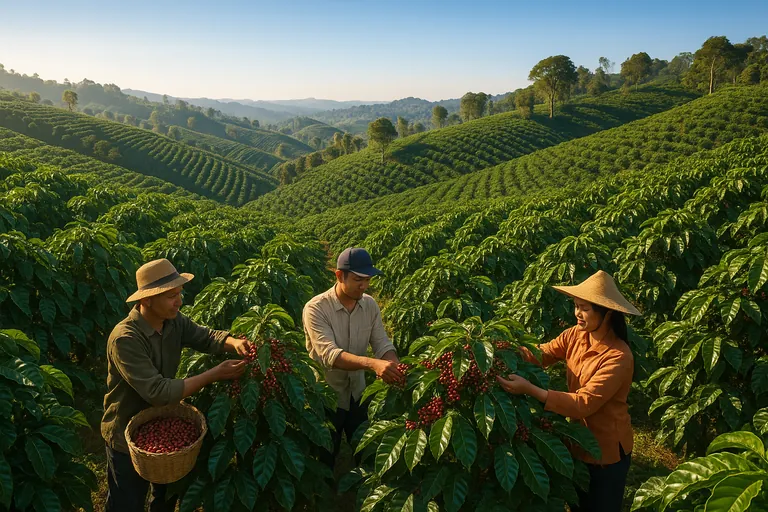
Wet-hulled and washed Indonesian greens age very differently. Here’s a practical, no‑nonsense storage and shelf‑life checklist we use with buyers in 2026: moisture and water activity specs, packaging choices, desiccant and container setup, warehouse targets, and roast scheduling to reduce fade.
If you buy Indonesian green coffee, you already know this: wet-hulled behaves like a different material in storage. It can taste glorious and heavy in the cup, but it ages faster and punishes sloppy logistics. We’ve exported both styles for years, and the shelf-life difference isn’t theoretical. It shows up in your warehouse and on your cupping table.
The goal of this piece is simple. Give you a 2026-ready checklist that protects quality. No romance. Just the settings we use, the trade-offs we’ve learned the hard way, and where wet-hulled vs washed diverge.
Why wet-hulled ages faster than washed
Wet-hulled, or Giling Basah, removes parchment early. Beans are handled and dried with much higher water mobility, so cell structures are more open. You get that big Sumatra body. You also get higher moisture exchange in storage. This makes wet-hulled more sensitive to ambient humidity swings, container sweat, and poor bagging. Washed coffees, protected by parchment longer during post-harvest and typically finished drier and tighter, are simply more stable over time.
The 7 buyer tips for 2026
1) What moisture and water activity specs should I set?
For wet-hulled lots, we set tighter specs than washed. It reduces mold risk and slows sensory fade.
- Wet-hulled target: Moisture 10.2–11.2 percent. Water activity 0.50–0.55. Reject above 0.58 aw. If you must accept 11.5 percent moisture, insist on aw below 0.55 and hermetic packaging.
- Washed target: Moisture 10.2–11.8 percent. Water activity 0.50–0.60. We prefer 0.52–0.58 aw for long voyages.
Reality check. Moisture alone doesn’t predict safety. Water activity is your mold risk indicator. We log both at intake and monthly. Three out of five storage complaints we troubleshoot came from buyers who never measured aw post-arrival. Need our intake QC worksheet and sampling protocol? If you want a copy, Contact us on whatsapp.
When washed matters. If your warehouse is warm or you have slow turnover, steer a larger share of your program to washed Indonesia. Examples that age well in our experience: Arabica Bali Kintamani Grade 1 Green Coffee Beans, Flores Green Coffee Beans (Grade 1), and Arabica Java Ijen Grade 1 Green Coffee Beans.
2) How long does wet-hulled stay fresh compared to washed?
We plan around a “prime window” and a “viable window.”
- Wet-hulled prime window: 4–6 months from milling date under hermetic storage at 16–22 C and 50–55 percent RH. Viable window: 6–9 months if aw stays ≤0.55 and you rotate quickly. After 6 months, expect flattening acidity, heavier herbal and early baggy notes if ambient RH drifts up.
- Washed prime window: 9–12 months under similar conditions. Viable window: up to 12–15 months if sealed hermetically, especially for tight-screen, well-sorted Grade 1 lots.
Roast scheduling. For wet-hulled Sumatra green coffee, we front-load production. We plan to finish most of a lot inside 90–120 days of arrival. Leave the last 10–20 percent for blends or darker profiles.
Related option. If you need consistent low-acidity components for longer horizons, consider controlled aged offerings like Musty Cup Green Coffee Beans (Aged Arabica) or Past Crop Green Coffee Beans. They’re built for stability and body when wet-hulled starts to fade.
3) Do I really need GrainPro or vacuum for wet-hulled?
Short answer. Yes for wet-hulled unless your transit is short, climate is dry, and turnover is fast. Here’s how we choose.
- GrainPro or other hermetic liners. Default for wet-hulled. One hermetic liner inside each jute bag. It buffers ambient humidity swings and container rain. For washed, use hermetic if your route crosses tropical seas or you store over summer.
- Vacuum. Use for micro-lots, long transit with multiple trans-shipments, or if you’ll freeze. Vacuum adds cost but pays back for rare wet-hulled microlots and long-term sample stability.
- Container desiccant. For equatorial shipments, we load 8–12 kg of container desiccant in a 20 ft. For a 40 ft, 15–20 kg. Hang strips evenly along side walls and doors. Use a clean, food-grade, dry container with kraft paper or carton slip-sheets to reduce condensation drip. Keep bags off walls and on pallets with airflow.
Common mistake. Buyers skip hermetic for wet-hulled because the bags feel “dry enough” at taste. Then container sweat pushes aw up mid-ocean. That’s where mold risk spikes.
4) What warehouse temperature and humidity prevent musty taints?
We target stable conditions. Swings are the enemy.
- Temperature: 16–22 C is our safe band. Above 25 C, aging accelerates noticeably, especially for wet-hulled.
- Relative humidity: 50–60 percent for washed. 50–55 percent for wet-hulled. Keep daily RH swing under 5 percent.
- Airflow and stacking: Palletize with airflow gaps. Don’t store against outside walls or under leaky skylights. Rotate pallets every 6–8 weeks in high-humidity climates.
Monitoring. Use data loggers at pallet height. Check dew point on humid days. If dew point approaches room temperature, pause inbound openings to avoid condensation in bags.
5) How can I spot early storage damage in wet-hulled?
We use a fast, low-cost triage.
- Visual color shift. Healthy wet-hulled is green-blue to blue-gray. Early fade trends to olive-brown, with duller, matte surfaces.
- Aroma drift. Fresh nutty and sweet herb becomes cereal, hay, or baggy. Do a sealed-jar headspace sniff: 100 g in a jar overnight. Musty or cardboard notes show up fast.
- Roast tell. More chaff, uneven color, and a sharp herbal spike at light roast. Watch for tipping at usual charge temps. If you raise end temp to normalize color and the cup goes hollow, you’re fighting age.
- Meters. Re-check moisture and aw monthly. A rise of 0.03–0.05 aw post-arrival is a red flag.
If a lot shows mild age, pull it into blends or darker profiles sooner. For clean, fully washed Indonesians like Bali Natural Green Coffee Beans or Aged (Age) Green Arabica Coffee Beans as supporting components, you can lift sweetness and keep the profile coherent.
6) Is freezing green coffee a good idea for wet-hulled Indonesians?
For micro-lots, yes, with the right protocol. For pallet-scale, usually no.
- When it works. Vacuum-packed 5–10 kg bricks or liner-sealed 30 kg bags, placed in a chest or upright freezer at stable sub-zero. We’ve held wet-hulled microlots for 9–12 months with minimal sensory drift.
- Risks. Condensation on thaw and bag delamination. Always thaw sealed to room temperature for 24 hours before opening. Never refreeze once opened. Label thaw date and use within 4–6 weeks.
- When to skip. Full pallets, non-hermetic jute, or frequent in-and-out access. The handling risk offsets the quality gain.
7) When is the best time to ship wet-hulled coffee from Sumatra?
Indonesia is equatorial, so you never fully escape humidity. But timing helps.
- Northern Sumatra main harvest peaks November to March. We like export windows March to June for fresh-crop wet-hulled after post-harvest conditioning. Secondary window September to November works well before year-end rains.
- What to avoid. January to February often brings heavier rain and port congestion. If you must ship then, increase desiccant load and insist on hermetic.
- Route considerations. Trans-shipments through very humid hubs compound risk. Choose direct services when possible or upgrade to vacuum for micro-lots.
Plan purchase and roast schedules around these windows. It saves you from fighting avoidable mold risk and sudden aw jumps mid-winter.
Quick product fits if you need a safer shelf-life plan
If you want Indonesia character with slower fade, blend your portfolio.
- Wet-hulled anchors with big body. Sumatra Mandheling Green Coffee Beans, Sumatra Lintong Green Coffee Beans (Lintong Grade 1), or Sulawesi Toraja Green Coffee Beans (Sulawesi Toraja Grade 1).
- Washed and semi-washed stabilizers. Arabica Java Ijen Grade 1 Green Coffee Beans or Java Preanger Grade 1 Green Coffee Beans to extend shelf life without losing Indonesian identity.
If you need help matching risk profile to your warehouse and turnover, Call us. We can advise on GrainPro vs vacuum, desiccant loading, and shipment timing for your lane.
Takeaways you can use tomorrow
- Set specs by process. Wet-hulled: 10.2–11.2 percent moisture and 0.50–0.55 aw. Washed: 10.2–11.8 percent and up to 0.60 aw.
- Hermetic for wet-hulled is not optional on tropical routes. Add 8–12 kg desiccant per 20 ft container.
- Store at 16–22 C and 50–55 percent RH for wet-hulled, with minimal daily swings. Monitor aw monthly.
- Roast wet-hulled earlier. Aim to finish most volume in 90–120 days of arrival. Use washed Indonesians to stabilize offers over the year.
Protect the lot and it will reward you. Cut corners and wet-hulled will tell on you fast. If you want to see our latest QC data by origin or request sealed and vacuum options for your 2026 bookings, View our products.