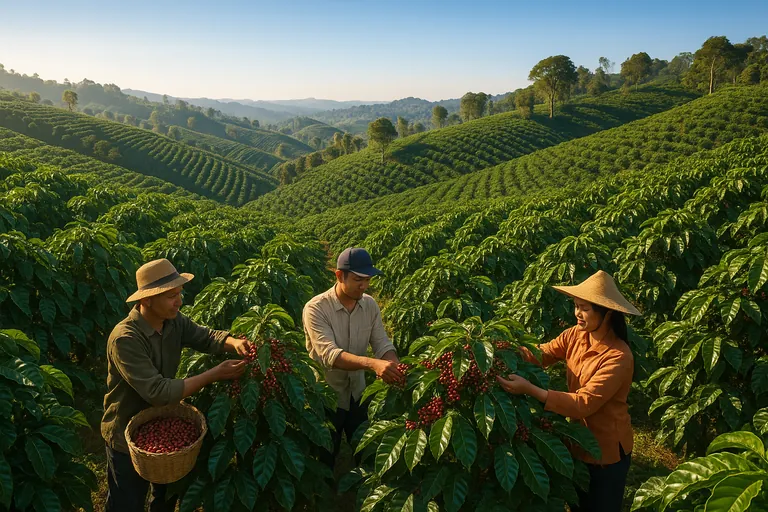
A field-tested, step-by-step CIFER guide for Indonesian coffee producers, roasters and exporters under GACC Decree 248 in 2025. Exact HS category choices for green (0901.11/.12) vs roasted (0901.21/.22) vs extracts (2101), timelines, photos/docs checklist, common rejection reasons and how to fix wrong-category applications.
If you’re trying to move Indonesian coffee into China in 2025, the most stressful part usually isn’t roasting curves or moisture specs. It’s that little CIFER number under GACC Decree 248. We’ve registered multiple facilities ourselves and for partners, and we’ve seen what makes applications sail through versus stall for weeks.
Here’s the playbook we actually use.
Our “0 to approved” hook
We went from zero CIFER presence to approved coffee facilities and first shipments in 21–28 days by nailing three things: choosing the right HS category, submitting clean facility evidence, and answering GACC’s follow-ups fast. The rest is execution.
The 3 pillars of a clean CIFER application (for coffee)
- Correct product mapping. Coffee splits into two regulatory paths in China. Coffee beans and roasted coffee are HS 0901. Coffee extracts/instant are HS 2101. Choose wrong and you’ll get rejected or stuck.
- Facility reality. Decree 248 registers facilities, not companies. If your trading company doesn’t physically process or store coffee, you can’t register yourself. The actual roaster, processor, or storage site must be in CIFER.
- Evidence beats claims. Clear photos, a one-page flow diagram, and a simple floor plan with process zones. In our experience, those three items cut questions by half.
Practical takeaway: Before you open the CIFER portal, list your products against HS 0901 or 2101 and decide exactly which facility you’re registering. If you outsource roasting, line up your roaster’s docs.
Week 1–2: Prep, mapping and evidence
Think of this as “market validation” for your application. You’re validating that what you make matches what CIFER expects.
-
Pick HS and product scope.
- Green coffee beans: HS 0901.11 (non-decaf). Examples: our Blue Batak Green Coffee Beans, Arabica Bali Kintamani Grade 1 Green Coffee Beans, Java Preanger Grade 1 Green Coffee Beans, Flores Green Coffee Beans (Grade 1).
- Roasted coffee: HS 0901.21 (non-decaf). Examples: Roasted Arabica Java Coffee, Roasted Espresso Coffee Blend, Roasted Arabica Lintong Coffee.
- Coffee extracts/instant: HS 2101. These are not “coffee beans” under 0901. If you produce instant coffee, apply under 2101 in CIFER as a different product category.
-
Decide facilities to register. Register every facility that processes or stores export coffee.
- Processing includes hulling, sorting, grading, blending, roasting, rebagging.
- Storage that only stages sealed bags can be added as a storage site in the same registration. If it’s a third-party warehouse that reworks coffee, register it separately.
-
Evidence package (what we upload every time):
- Business license in Bahasa and English translation (company name must match CIFER exactly).
- Floor plan or simple layout with zones: receiving, processing, packaging, finished goods, pest control points.
- Process flow chart. Example for green 0901: receiving → cleaning/sorting → grading → metal detection/visual check → packing → storage → container loading.
- 8–12 photos. Exterior with signage, receiving area, processing line, packaging area, finished goods warehouse, pest control devices, handwash/ hygiene points, QC area.
- Quality docs. HACCP or ISO 22000 certificate if you have it. If not, a one-page sanitation SOP and pest control plan works.
- Water test if water contacts coffee post-hulling/roasting (mainly for washed or wet cleaning steps). Recent microbiology test is sufficient.
What’s interesting is how much clarity the photos create. Grainy, dim shots cause delays. We’ve seen the difference between 10-day and 30-day approvals come down to photo quality.
Week 3–6: File in CIFER and respond fast
Here’s the step-by-step inside the CIFER portal for Decree 248 self-registration of low-risk foods like coffee.
- Create/Log in to CIFER. Choose “Self-registration of overseas manufacturers.”
- Enterprise basic info.
- Name in English and local language. Exactly as on your license.
- Unified social credit/business license number (Indonesia: NIB/OSS number) and tax ID.
- Physical address of the facility. Don’t use a PO box.
- Legal representative and contact person details.
- Facility type selection. Choose production/processing. Add storage if you store finished coffee off the processing floor.
- Product category selection.
- Choose Coffee under HS 0901 for beans and roasted. Then pick green vs roasted, decaf vs non-decaf.
- Choose HS 2101 for coffee extracts/instant. Do not mix with 0901 in the same entry.
- Product details.
- Annual capacity, packaging types (jute with liner, valved bags, retail packs), shelf life.
- Country of origin: Indonesia. Regions optional.
- Process description. Paste your flow steps. Keep it simple and consistent with your photos.
- Upload evidence. Photos, floor plan, HACCP/ISO, water test if applicable.
- Associated facilities. Add separate storage addresses if you hold stock outside the main plant.
- Submit. Note your application number.
Typical timeline. Coffee approvals we’ve seen are 2–4 weeks. Clean, complete files come back in 10–15 working days. If GACC asks questions, reply within 2–3 days with a concise fix.
Week 7–12: Scale and optimize (add SKUs, add sites)
Once your code is issued, you can:
- Add roasted coffee to an existing 0901 registration by filing a change to add 0901.21 if you initially registered only green 0901.11.
- Register a new facility if you add a roastery or third-party warehouse that reworks coffee.
- Renewals sit on a 5-year cycle. Set a reminder to start renewal 6 months before expiry. Update any major changes within 60 days (name, address, ownership, process, capacity).
We expand product lines this way. For example, after certifying green exports like Sumatra Mandheling Green Coffee Beans and Gayo Long Berry Green Coffee Beans under 0901.11, we add roasted offers like Roasted Arabica Aceh Gayo by submitting a product change in CIFER rather than starting from scratch.
Quick answers to questions we get every week
Do green coffee beans need Decree 248 registration in 2025?
Yes. All overseas facilities that produce, process, or store coffee beans for export to China must register under Decree 248. Coffee is a low-risk category, so you self-register via CIFER.
In CIFER, which category should I choose for HS 0901 coffee beans?
Pick Coffee under HS 0901 and select green coffee (0901.11 for non-decaf). Roasted coffee is 0901.21. Decaf options are 0901.12 and 0901.22. Don’t use 2101 unless you make extracts/instant.
Can a trading company register if roasting is outsourced?
Only if the trader owns or operates the actual facility. Decree 248 registers facilities. If you outsource roasting, the roaster’s facility must be registered. You can still be the exporter of record, but your CIFER code must match the facility that processed/packed the goods.
What documents and photos are required?
- Business license and translation, address and contact details.
- Floor plan + process flow chart.
- 8–12 clear photos showing exterior, processing, packaging, storage, hygiene/pest control, QC.
- HACCP/ISO or sanitation and pest control SOPs. Water test if water contacts beans post-hulling.
- Product list with HS codes, capacity, packaging, shelf life.
How long does GACC approval take and can I ship while pending?
Plan for 2–4 weeks. Some pass in 10 working days. Don’t ship while pending. Importers must declare your GACC registration number in customs. Shipping without an approved code risks holds or returns.
Do I need to register a separate warehouse if I only sort and pack beans there?
Yes. Sorting and packing is processing. Register that site. If a warehouse only stores sealed bags with no rework, add it as an associated storage site under the same enterprise entry.
How do I fix it if I chose the wrong category (0901 vs 2101)?
Use the change/correction function if your scope is still coffee but you picked the wrong 0901 sub-item. If you mixed 0901 with 2101 by mistake, withdraw and reapply for the correct category. Keep the facility code consistent for future renewals.
Bonus: You don’t need your Chinese importer’s record number to file CIFER, but your buyer does need to have their importer record with GACC to clear your goods.
The 5 mistakes that get coffee applications rejected
- Wrong HS category. Registering instant coffee under 0901 or roasted under 2101. Map products before you touch CIFER.
- Inconsistent names/addresses. Company name in CIFER doesn’t match your license. Copy-paste exactly and include English translation.
- Poor photo evidence. Dark, blurry, no signage. Shoot in daylight, include a sign with your enterprise name at the entrance.
- No process flow or floor plan. A one-page diagram saves weeks.
- Missing associated facilities. Third-party grading or rebagging warehouse not listed. If they touch the beans, include or register them.
We also see over-claiming. Saying you have HACCP when you don’t, or listing a capacity that doesn’t match your equipment. Keep it honest and you’ll move faster.
Resources and next steps
If you’re mapping your products now, use this quick checklist:
- Green or roasted beans. Use HS 0901.11/.21. Examples: Bali Natural Green Coffee Beans, Sumatra Lintong Green Coffee Beans; roasted options like Roasted Arabica Natural Process Coffee.
- Extracts/instant. Use HS 2101. Register separately.
- Facilities. Register every site that processes or repacks. Add pure storage as associated site.
- Evidence. License + floor plan + process flow + 8–12 photos + hygiene docs.
- Timing. Submit by Week 3. Expect approval 2–4 weeks later.
Need help with your specific situation or a second look at your photo set? We’re happy to share what’s worked for Indonesian coffee plants lately. You can Contact us on whatsapp. If you’re also shortlisting origins for your China program, feel free to View our products and we can suggest HS mapping and packaging specs that align with Decree 248 and your roaster needs.
A quick note on Decree 249. It governs inspection and quarantine at the border. It’s separate from 248’s facility registration. We won’t go deep here, but in practice, clean 248 files make 249 inspections smoother.
That’s the system we use. It’s not glamorous. But it’s fast, reproducible, and it keeps coffee moving from Indonesia to China without drama.